


Email marketing in Turkey still has a strong place in the digital mix in 2026. People scroll fast, compare brands quickly and move across many platforms each day. Yet a clear email can still reach them in a more direct and personal way. It can educate, remind, nurture and guide a reader from interest to action.
Turkey also gives brands a wide digital audience. Internet use is high, mobile habits are strong and customers expect smooth online experiences. For UK and global brands looking at Turkey, email works best when it feels useful, timely and respectful.
This is why email marketing strategy Turkey needs more than random newsletters. It needs clear consent, smart data, mobile-friendly design, strong content and a link to wider digital marketing activity. When email connects with SEO, paid media, social media and CRM, it becomes a serious growth channel.
Is Email Marketing Still Effective in 2026?
Yes, email still works. It works because it is direct, measurable and built around people who have shown interest in a brand. Social media can create attention. Search can bring people to a website. Email can keep the relationship active after that first visit.
The strongest brands use email to continue the conversation. They send welcome messages, useful guides, reminders, updates and loyalty content. Each message has a clear purpose.
Why email remains a direct channel for customer relationships
Email reaches a personal space. A brand is speaking to someone who has joined a list, made an enquiry, downloaded a guide, attended an event or bought something before.
That makes the channel valuable. It gives the brand a way to stay present. It also gives the reader a simple path back to the website, product page or booking form.
This is why customer retention email marketing matters in 2026. It costs more to win new attention than to stay useful to people who already know the brand.
What 2026 email benchmarks reveal about engagement
Current email benchmarks still show strong results for brands with clean lists and relevant messaging. Automated emails often perform better than one-time campaigns because they respond to user behaviour.
For example, a welcome email can arrive after sign-up. A product reminder can arrive after browsing. A nurture email can arrive after a report download. These messages feel more natural because they match the reader’s action.
That is where email automation Turkey becomes useful. It allows brands to create journeys instead of single messages.
Why open rates alone give an incomplete picture
Open rates can show interest, yet they are only one part of the story. Clicks, replies, conversions, bookings, and repeat purchases tell a clearer story.
A campaign may have a moderate open rate and still create strong sales. Another may gain many opens and few actions. This is why brands should measure the full journey.

Why Turkey Is a Strong Market for Email Strategy
Turkey has a large and active digital audience. People use mobile phones, search engines, social platforms, e-commerce sites and email across the same day. This creates room for brands that can communicate clearly.
For UK and global companies, an email strategy in Turkey can support market entry, lead generation, customer retention and brand trust.
Turkey’s internet and mobile adoption in 2026
Turkey has a strong digital population. Many users access content through mobile devices, which means email design must be simple and fast.
A good campaign should use:
| Email element | Best approach |
| Subject line | Short, clear and useful |
| Preview text | Strong reason to open |
| Body copy | Simple and direct |
| CTA | One clear next step |
| Design | Mobile-friendly layout |
For email marketing in Turkey 2026, a mobile-first email is essential. Long blocks of text can lose attention quickly. Short sections, clear buttons and useful content work better.
How social media, search and email work together
Email performs best when it is part of a wider plan. Search can bring someone to a blog. Social media can make the brand feel familiar. Paid advertising can create reach. Email can guide that person towards a deeper relationship.
This is where omnichannel marketing in Turkey becomes powerful. A reader may first meet a brand on Instagram, search the brand later, visit the website and then join the email list. Each channel plays a role.
What Makes Email Marketing Work in Turkey?
Strong email marketing is built on relevance. People respond to emails that feel useful to them. They ignore messages that feel generic.
A good strategy should focus on consent, segmentation, content quality and regular testing.
Consent first, audience building
Consent sits at the centre of email activity. Brands should build lists through clear sign ups, forms, events, downloads and customer journeys.
A consent-led list is usually stronger than a large cold list. It contains people who have chosen to hear from the brand. That makes engagement easier and trust stronger.
Segmentation by behaviour, language and buying stage
Email segmentation assists brands in sending the right message to the right person. A new subscriber should receive a different message from someone who has bought three times.
Useful segments can include:
| Segment | Email focus |
| New subscriber | Welcome and brand introduction |
| Active lead | Education and the next step |
| Recent customer | Product care and loyalty |
| Repeat customer | Exclusive value and updates |
| Inactive reader | Preference update and re-engagement |
This is also where email personalisation strategy becomes useful. Personalisation means more than adding a first name. It means sending content that matches interest, location, behaviour and stage.
Mobile-first design and short-form messaging
Many readers open emails on their phones. This means every email should be easy to scan.
A strong email usually has:
- One clear idea
- Short paragraphs
- A simple layout
- A direct CTA
- Fast-loading images
- Useful links
The aim is to make the message easy to understand in seconds.
CRM data and lifecycle journeys
CRM email marketing connects email with customer data. It assists brands in understanding what people have done and what they may need next.
For example, a CRM can show who downloaded a guide, who booked a call, who bought a product and who has gone quiet. That data can shape better emails.
This supports lifecycle email marketing, where each message fits a stage in the customer journey.

Email Marketing Compliance in Turkey
Compliance is central to trust. Brands that send emails in Turkey need to understand the rules around commercial messages and personal data.
This is especially important for global brands that may be used to UK, EU or US standards.
What IYS means for commercial electronic messages
IYS is Turkey’s Commercial Electronic Message Management System. It allows people to manage permissions for commercial electronic messages.
For brands, this means email permissions must be handled carefully. Commercial messages should go to people with clear permission, and readers should have a simple way to manage preferences.
This makes email marketing compliance Turkey a key part of planning.
What KVKK means for personal data usage
KVKK is Turkey’s personal data protection law. It relates to how personal data is collected, used, stored and processed.
Email addresses, names, preferences and behaviour data can all count as personal data. This means brands need clear data practices and transparent communication.
The keyword here is trust. When people understand how their data is used, they are more likely to stay engaged.
A short note for UK and global brands
UK and global brands should align Turkish requirements with their own internal data rules. For UK teams, PECR and UK GDPR also matter when UK audiences are included.
A good approach is to create one high standard for consent, data use, and email clarity across all markets.
Brands can also connect email with content marketing, search visibility and reputation building.
Email Strategy in Turkey for 2026
A strong 2026 strategy should move beyond basic newsletter sending. The best email plans are built as journeys.
Each journey should have a purpose. Some emails build trust. Some educate. Some sell. Some bring people back. Some strengthen loyalty.
Welcome sequences for new subscribers
A welcome sequence is the first impression. It should introduce the brand, explain the value and guide the reader towards a useful next step.
A simple welcome flow can include:
- A warm introduction
- A useful resource or brand story
- A clear CTA
- A follow-up based on the reader’s action
This creates a better start than a single welcome message.
Lead nurturing for B2B brands
B2B email marketing in Turkey should focus on trust, expertise and clear business value. B2B buyers often take time before they act.
A good B2B email journey can include the following:
- Industry insight
- Case style examples
- Event follow-up
- Thought leadership
- Consultation prompts
- Service education
This keeps the brand visible while the buyer is still comparing options.
E-commerce flows for repeat purchases
E-commerce email marketing in Turkey can guide shoppers before and after purchase. A strong e-commerce setup may include browse reminders, basket reminders, post-purchase education and loyalty emails.
These flows can increase repeat purchases because they feel timely. They also support email marketing ROI because the brand uses existing audience data more effectively.
Re-engagement campaigns for inactive contacts
Some contacts may stop opening or clicking. A re-engagement campaign can invite them back with useful content, a preference update or a clear reason to stay connected.
The tone should feel friendly and simple. It should remind the reader of the value they can receive.
Event, tourism, healthcare and service sector email journeys
Turkey has strong sectors where email can work well. Tourism, healthcare, education, real estate, retail and professional services can all use email in different ways.
A tourism brand may send seasonal guides. A healthcare brand may send appointment reminders and educational content. A real estate company may send property updates. A professional service firm may send insights, invitations and consultation routes.
How AI Is Changing Email Marketing
AI is changing the way teams plan and test email. It can assist with timing, segmentation, subject line ideas and performance analysis.
Yet the best email still needs human judgment. People want clear and useful messages.
AI for segmentation and timing
AI email marketing can support smarter audience grouping. It can study behaviour and suggest when a reader may be ready for the next message.
This can improve timing and make campaigns feel more natural.
AI for content testing and subject line variation
AI can create several subject line options, preview text ideas and content versions. Teams can then choose the strongest option and adjust it to match the brand voice.
Testing matters because small changes can improve clicks. A clearer subject line or stronger CTA can change campaign results.
Human brand voice and trust signals
Email should still sound human. Readers respond to simple language, honest value and clear next steps.
Trust signals also matter. A clear sender name, relevant links, brand consistency and useful content all make emails feel safer and more professional.
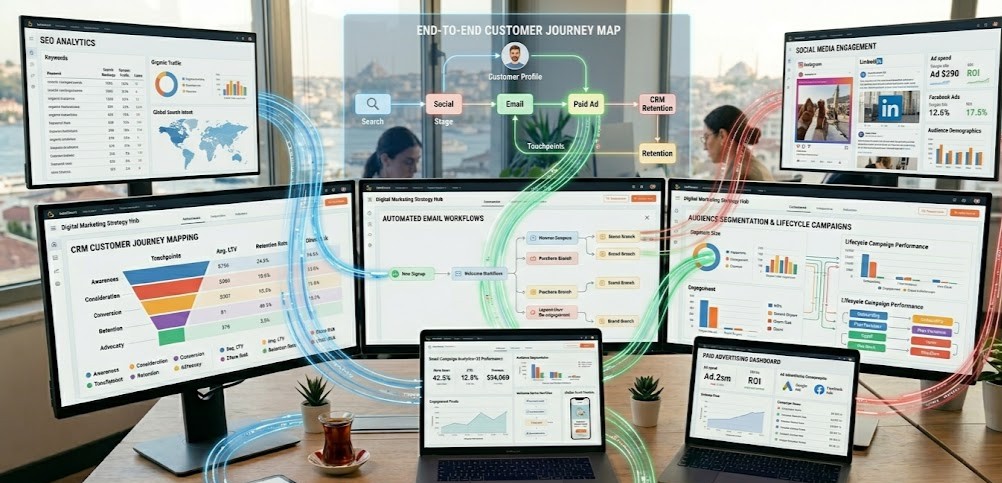
The Role of Email in Omnichannel Marketing
Email works best when it sits inside a larger digital system. It should connect with content, search, paid media, social media and PR.
This is why email should never sit alone. It should support the full customer journey.
Connecting email with SEO and content marketing
A search-optimised blog can bring readers to a website. Email can keep that relationship active after the visit.
For example, a reader may find a guide through search, join the mailing list and later receive related insights. This connects SEO with email in a practical way.
For more insight into modern search, read Pella Global’s guide on optimising content for AI search engines.
Connecting email with paid advertising
Paid ads can create awareness fast. Email can continue the conversation after someone clicks.
This makes ad spend more useful. The brand can invite visitors to sign up, then nurture them through email instead of relying only on repeated ads.
Connecting email with social media and digital PR
Social media builds day-to-day visibility. Digital PR builds authority and trust. Email brings that visibility into a direct channel.
For example, a brand can share a media feature, event recap or expert article through email. This keeps the audience close to the brand story.
Measuring the full customer journey
A full journey view connects source, content, email action and conversion. It shows how people move from discovery to decision.
This gives marketing teams stronger insight. It also shows which channels are creating real value.
Metrics That Matter in 2026
Email should be measured with clear and useful metrics. The goal is to understand quality, action and long-term value.
Delivery rate
Delivery rate shows how many emails reach inboxes. Good delivery depends on list quality, sender reputation and technical setup.
Click rate
Click rate shows active interest. It is one of the clearest signs that people find the message useful.
Conversion rate
Conversion rate shows how many readers take the desired action. This action may be a booking, enquiry, download or purchase.
Revenue per subscriber
Revenue per subscriber is useful for e-commerce and subscription-based brands. It shows how much value the list creates over time.
Unsubscribe rate
Unsubscribe rate shows how readers respond to email frequency and relevance. A healthy list changes over time, and preference options can keep the audience better aligned.
Customer lifetime value
Customer lifetime value connects email with long-term growth. Email can support repeat purchases, stronger loyalty and better brand recall.
FAQs on Email Marketing in Turkey
Is email marketing still effective in Turkey in 2026?
Yes. Email is still effective when it is built around consent, relevance and clear customer journeys. Email marketing in Turkey works best when it connects CRM data, automation and personalised content.
What is the best email strategy for Turkish audiences?
The best strategy starts with consent, segmentation and mobile-friendly design. Brands should match emails to audience behaviour, buying stage and customer interest.
Do brands need to follow IYS and KVKK for email marketing in Turkey?
Yes. IYS relates to commercial message permissions, while KVKK relates to personal data usage. Brands should keep consent clear, make sender details visible and give readers simple preference controls.
How can email work with SEO and social media?
SEO can bring people to a website, while social media can build familiarity. Email can keep the relationship active with useful updates, reminders and personalised journeys.
Strategic Digital Growth With Pella Global
At Pella Global, digital strategy is built around visibility, trust and measurable growth. From email journeys and automation to search, content and digital PR, the team creates connected strategies that guide brands across Turkey and global markets with stronger email marketing in Turkey.
