


In today’s fast-moving digital world, there are numerous ways to get seen online, and SEO (Search Engine Optimisation) is only one of the many. Things are changing. Search is changing. And at Pella Global, we are seeing this shift happen in real time.
Artificial intelligence is now shaping how people search for information. Instead of scrolling through pages of links, users are asking questions and getting direct answers. Because of this, a new approach has become important. This is called GEO (Generative Engine Optimisation).
When you want to stay visible, you must understand what GEO in digital marketing means. You also need to learn how to optimise content for AI search engines. For your content to show up where it matters, you need this.
In this guide, we will walk through everything step by step. We will explain Generative Engine Optimisation, break down the difference between GEO and SEO, and share best practices for AI-driven search optimisation. By the end, you will know how to improve your AI-driven search visibility and build a strong generative AI content strategy.
Why AI Search Is Rewriting the Rules of Search Visibility
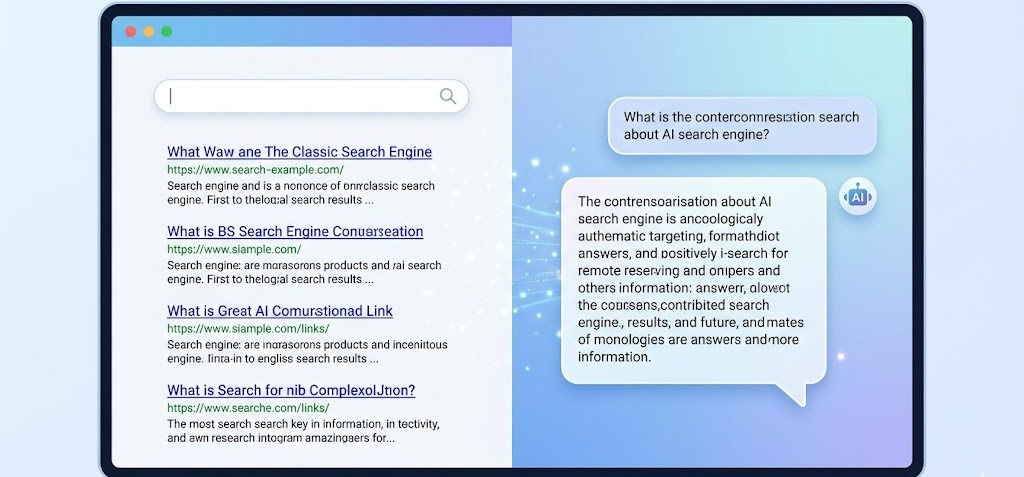
Search no longer works the same way it used to. Before now, search engines like Google showed users a list of links. These links were ranked based on keywords, backlinks, and other SEO factors.
And today, AI search engines such as ChatGPT, Gemini, and Perplexity do something different.
They give answers.
They read content from different sources. Then they combine that information into one simple response, eliminating the need to click multiple links.
This change is big.
It means your content must now be easy for AI to read and use. Your content must be clear, structured, and useful, or it may be ignored.
Users also expect more now. They want fast answers. They want simple explanations. They want content that feels natural and easy to understand.
This is why AI search optimisation and AI content optimisation are now essential.
At Pella Global, we assist brands in adapting to this new reality. We focus on building strong generative AI content strategy systems that match how AI tools deliver answers.
What Is GEO? Generative Engine Optimisation Explained
GEO (Generative Engine Optimisation) is the process of creating and structuring content so that AI search engines can understand it, extract it, and use it in their responses.
This is different from traditional SEO.
SEO focuses on ranking high on search pages.
Generative engine optimisation focuses on being included in AI-generated answers.
Defining GEO in the AI Search Landscape
When someone asks a question on an AI platform, the system looks for useful content. It scans many sources. Then it selects the best information. When your content is clear and valuable, it can be picked. That is the goal of GEO (Generative Engine Optimisation).
Your content becomes part of the answer. This is a key idea in any generative AI search visibility guide. It becomes about being used.
The Difference Between GEO and Traditional SEO
The difference between GEO and SEO is simple and important. Here’s why:
- SEO tries to get your page to rank high.
- GEO tries to get your content selected by AI.
- SEO depends on keywords and backlinks.
AI search optimisation depends on clarity, structure, and meaning.
With GEO, your content must:
- Answer questions clearly
- Be easy to scan
- Be easy for machines to understand
When you do this well, your content can appear inside AI responses.
Why GEO Matters More Than Ever (2026 and Beyond)
AI is growing fast. More people are using AI tools every day. This means more searches are happening inside these platforms.
Because of this, optimising content for Generative AI is no longer optional.
It is necessary.
AI systems prefer content that is:
- Clear
- Direct
- Well-structured
- Based on facts
When your content meets these standards, it is more likely to be used.
At Pella Global, we focus on improving AI visibility metrics. We assist brands to become trusted sources. This increases their AI-driven search visibility over time.

How AI Search Engines Work — A Snapshot
To improve your AI search optimisation, you need to understand how AI search engines work.
The process is simple:
- They crawl content
- They understand meaning
- They generate answers
And inside this process, there is a lot happening.
Crawling vs Semantic Interpretation
Traditional search engines focus on keywords.
And AI search engines go deeper. They look at meaning. They study context. They try to understand what the content is really saying. This is called semantic interpretation.
Because of this, AI content optimisation must focus on clarity and usefulness.
How AI Generates Answers
Once AI finds useful content, it does something important. It combines information from different sources. Then it creates one clear answer.
This is why your content must be:
- Accurate
- Simple
- Easy to summarise
These are key parts of best practices for AI-driven search optimisation.
Generative Engine Optimisation Best Practices
To succeed with GEO versus SEO explained, you need to change how you create content.
Write With AI Readability in Mind
Simple writing works best.
Use short sentences. Use simple words. Break ideas into small parts. This improves both user experience and AI search optimisation.
Prompts vs Keywords
Keywords are still useful. And AI focuses more on questions.
So your content should include natural questions like:
- What is GEO (Generative Engine Optimisation)?
- How to optimise content for AI search engines
This improves your chances of being selected.
Answer First, Then Explain
Start with a direct answer. Then explain it.
AI prefers this structure because it can quickly extract the main point. This is a strong generative AI content strategy approach.
Create Trust Signals & Authority
AI systems trust reliable content.
To improve your AI visibility metrics, you should:
- Use real data
- Show expertise
- Create clear examples
This builds authority and improves your AI-driven search visibility.
Technical Foundation — How to Build GEO-Friendly Pages
Good structure is a great asset for your website’s page. In addition to this, your website must also be technically strong.
Schema Markup & AI-Specific Tags
Structured data assists AI in understanding your content better.
You can use:
- FAQ schema
- Article schema
- Review schema
This improves your generative engine optimisation.
Fast, Accessible, Crawlable Content
Your website should be:
- Fast
- Mobile-friendly
- Easy to crawl
When your site is slow or blocked, AI will find it less easy to access.
This affects your AI search optimisation.
Metadata and llms.txt (Emerging Practices)
New tools like llms.txt are becoming useful. They assist in guiding AI systems. These tools are part of modern AI content optimisation strategies.
Content Types That Perform Best in GEO
Some content formats perform better in AI search engines.
FAQs & Conversational Pages
FAQ pages work very well. They answer questions directly, and this matches how AI responds to users.
Definitions & Topical Guides
Clear definitions are very useful. They assist AI in quickly understanding your content. This is important for ‘what is GEO in digital marketing’ queries.
Case Studies & Data-Backed Examples
AI prefers content with proof.
Use:
- Data
- Statistics
- Real examples
This improves your AI-driven search visibility.
Multi-Format Content (Video, Audio, Social)
AI can also use content from videos and audio.
Adding different formats supports your generative AI search visibility guide.
Keeping Content Relevant — Updating for AI
To keep your content relevant, it must stay fresh.
Why Freshness Matters
AI prefers recent information. Old content may be ignored.
Date-Stamping Content
Adding dates shows that your content is current. This assists AI in trusting your content.
AI Preference for Recent Data
New data improves accuracy. This supports better AI visibility metrics.
Measuring GEO Success — New Metrics For the AI Era
Tracking GEO (Generative Engine Optimisation) is different from SEO.
AI Citation Share & Brand Mentions
Check how often your content is used by AI. This shows your real visibility.
AI-Driven Referral Metrics
Track traffic from AI tools. This shows how well your AI search optimisation is working.
Engagement Signals (Time, Depth & Relevance)
AI also looks at user behaviour.
- Time on page matters.
- Depth matters.
- Relevance matters.
Tool Recommendations
Use tools to track performance. They assist in improving your generative AI content strategy.
Common GEO Oversights to Avoid
Avoid these common oversights:
- Using too many keywords
- Ignoring structured data
- Late testing of content in AI tools
- Forgetting global audiences
To increase your AI-driven search visibility, avoid these oversights.
Future Trends in AI Search & GEO
The future of AI search optimisation is still evolving.
AI Model Improvements (Personalisation, Reasoning)
AI is getting smarter. It can understand users better. It can give more personalised answers.
Voice Search & Conversational Search Integration
Voice search is growing. People are speaking their queries more, so your content should match this style.
Cross-Platform Visibility Strategies
Content must work across platforms. This assists in improving long-term AI visibility metrics.
How to Structure Content for Maximum AI Extraction
To improve AI search optimisation, structure matters a lot. AI reads content differently in comparison to the way humans do. It scans for clear patterns. It looks for sections it can quickly understand and reuse.
At Pella Global, we recommend breaking content into small, clear blocks. Each section should focus on one idea. Use headings to guide both users and AI search engines.
Start with a direct answer. Then add a short explanation. This makes your content easy to extract. It also supports strong AI content optimisation.
Lists also assist. Bullet points and numbered steps make it easier for AI to pick key details. Avoid long paragraphs. They are harder for machines to process.
Clear structure improves your chances of being cited. It also strengthens your AI-driven search visibility. This is a core step in building a strong generative AI content strategy.
The Role of Topical Authority in GEO
Topical authority is very important in GEO (Generative Engine Optimisation). It means covering a subject in depth. It shows that your content is reliable and complete.
AI search engines prefer sources that show strong knowledge. For your website to be trusted, it must cover a topic more than one time. When you have many related articles, your authority grows.
At Pella Global, we build clusters of content. Each piece connects to a larger topic. This supports better generative engine optimisation.
For example, instead of one article, create multiple pieces:
- A guide
- A FAQ
- A case study
This approach improves your AI visibility metrics. It also increases your chances of being cited across different queries.
Strong topical authority is a key part of best practices for AI-driven search optimisation and long-term AI-driven search visibility.
How User Intent Shapes AI Search Results
User intent plays a big role in AI search optimisation. AI tools try to understand what the user really wants and the meaning behind it.
There are different types of intent:
- Informational (learning something)
- Navigational (finding something)
- Transactional (taking action)
AI search engines adjust their answers based on this intent. This is why your content must match real user needs.
At Pella Global, we focus on aligning content with intent. We ask simple questions:
- What is the user trying to learn?
- What answer do they expect?
This improves AI content optimisation and strengthens your generative AI content strategy.
When your content matches intent, it becomes more useful. This increases your chances of being selected. It also boosts your AI-driven search visibility and overall performance.

GEO Case Studies — How Brands Win in AI Search
Brands that invest in generative AI content strategy are already seeing results.
They use:
- Clear structure
- Direct answers
- Strong data
This improves their AI-driven search visibility and builds trust.
FAQs on Generative Engine Optimisation
1. What does GEO stand for?
GEO (Generative Engine Optimisation) means creating content that can be used and cited by AI search engines.
2. How is GEO different from SEO?
The difference between GEO and SEO is clear.
SEO focuses on ranking.
GEO focuses on being used in answers.
3. Can existing content be GEO-optimised?
Yes.
You can update old content by:
- Improving structure
- Adding Q&A sections
- Making language clearer
This supports better AI search optimisation.
Conclusion — The New Era of Search Optimisation
Search is changing fast.
GEO (Generative Engine Optimisation) is now a key part of digital strategy. It assists your content to stay visible in a world powered by AI.
At Pella Global, we believe the future belongs to brands that adapt early. We assist businesses in building strong AI search optimisation systems, improving AI-driven search visibility, and growing with confidence in this new era.
When you want to stay ahead, now is the time to invest in generative engine optimisation and build a strategy that works for the future of search.
