


Google Analytics 4 for Turkish businesses has become a core growth tool in 2026. It shows who visits your site, how they behave, what they value, and which actions lead to enquiries, sales, bookings, or repeat visits.
For Turkish brands speaking to a UK or global audience, this matters. A good GA4 setup gives every campaign a clear purpose.
What Google Analytics 4 Means for Turkish Businesses in 2026
GA4 for Turkish businesses is built for modern digital journeys. People discover brands through search, AI tools, social media, referral links, paid ads, and direct visits. They may return many times before they buy or enquire.
Why GA4 tracking matters for local and global growth
Turkish companies often serve more than one market. A fashion brand may sell in Istanbul and London. A clinic may speak to patients in Turkey, the UK, Europe, and the Gulf. A B2B exporter may depend on trade enquiries from several regions.
GA4 tracking shows which markets create action. It also shows which campaigns bring the right audience.
How Turkey’s digital market makes clean analytics more valuable
Turkey has a fast digital culture. Search, social media, e-commerce, and mobile messaging all shape buying choices.
Clean analytics keeps teams focused.

The Core GA4 Shift: From Page Views to Events
GA4 measures actions as events. A page view is one event. A scroll, video view, file download, form fill, product view, add to cart action, and purchase can also be events.
This is the base of GA4 event tracking. It gives a richer view of the customer journey than page views alone.
Automatically collected events
GA4 collects some events when the tracking tag is active. These include first visits, session starts, and page views.
Enhanced measurement events
Enhanced measurement can collect common website actions from the GA4 interface. These may include scrolls, outbound clicks, site search, video engagement, file downloads, and form interactions.
Recommended and custom events
Recommended events use names set by Google. Common examples include generate_lead, sign_up, view_item, add_to_cart, begin_checkout, and purchase.
Custom events fit actions that are unique to the brand. A clinic may track appointment_request. A manufacturer may track distributor_enquiry. A property brand may track viewing_request.
The GA4 Metrics Turkish Businesses Should Track First
A useful report starts with a small set of strong metrics. The best metrics connect audience, engagement, action, and value. This mix of GA4 metrics 2026 and a data-driven marketing strategy keeps reports useful.
Users, engaged sessions, and engagement rate
Users show reach. Engaged sessions show quality visits. Engagement rate shows the share of sessions with meaningful activity.
These metrics are a better starting point than traffic alone.
Traffic acquisition and user acquisition
Traffic acquisition shows where sessions come from. User acquisition shows where users first discovered the site.
This is useful for digital marketing analytics. A person may first arrive through SEO, return from paid search, and then complete a lead form through direct traffic.
Landing page performance
Landing pages are the first pages people see. They matter for SEO, paid ads, Digital PR, AI search, and referrals.
Track landing pages by engagement, key event rate, and revenue.
Key event rate
A key event is an action that matters most. Examples include purchase, generate_lead, sign_up, phone_click, email_click, WhatsApp_click, and quote_request.
Key event rate shows how often users take these actions.
Revenue and e-commerce value
For e-commerce brands, revenue tracking shows what creates income. Track purchases, item revenue, average purchase revenue, and product performance.
This is where Google Analytics for e-commerce becomes useful. For brands selling across Turkey and other markets, Google Analytics for Turkish e-commerce can show which products, countries, and campaigns create value.

Key Events: The Actions That Connect Tracking to Business Growth
GA4 key events turn activity into business meaning.
Lead generation key events
For lead generation, track completed forms, consultation requests, demo bookings, newsletter sign ups, phone clicks, email clicks, and WhatsApp clicks.
This makes GA4 lead tracking clearer.
E-commerce key events
For ecommerce, track view_item, select_item, add_to_cart, view_cart, begin_checkout, add_shipping_info, add_payment_info, purchase, and refund.
These actions show how shoppers move through the buying path. Strong GA4 ecommerce tracking gives product and campaign teams a cleaner view of what drives revenue.
Contact and enquiry events for Turkish service brands
Many Turkish service brands rely on direct contact. A visitor may tap a phone number, send a WhatsApp message, or complete a quick form.
GA4 Ecommerce Tracking for Turkish Online Stores
Online stores need more than total sales. They need to see how shoppers move from discovery to purchase.
Product views and item selection
Product views show demand. Item selection shows which products attract action from category pages, search results, or product lists.
Add to cart and cart view actions
Add to cart shows buying intent. View cart shows the shopper moving closer to purchase.
Track these steps by product, device, market, and campaign.
Checkout journey tracking
The GA4 purchase journey report shows steps from session start to product view, add to cart, checkout, and purchase.
The checkout journey gives deeper insight into checkout behaviour. This supports better GA4 conversion tracking and a smoother buying path.
Purchase, revenue, and item-level reporting
Purchase events should include value, currency, transaction ID, and item details. Item details make product reports much stronger.
With item-level reporting, teams can see top products, product revenue, category performance, and repeat purchase patterns.
Tracking Leads, Enquiries, and High-Intent Actions
For many Turkish companies, the website is a lead engine. That means contact actions deserve careful tracking.
Form submissions and generate_lead events
Use generate_lead for completed lead forms. Track form_start when it adds value to the journey.
This shows which pages bring people ready to speak, request a price, book a call, or ask for details.
Phone, email, and WhatsApp clicks
Phone, email, and WhatsApp clicks are high-intent actions. They are also common across Turkish business websites.
Consultation, booking, and quote request tracking
Consultation, booking, and quote request events are ideal for service-led brands. They also fit B2B companies with a longer sales cycle.
What to Track for SEO, Digital PR, and Brand Visibility
Analytics should connect visibility to action. This is where SEO, Digital PR, and content gain stronger commercial value.
For more on AI search visibility, read Pella Global’s GEO guide.
Organic traffic quality
Organic traffic should be measured by quality. Track engaged sessions, landing pages, key event rate, and revenue from organic search.
This turns SEO reporting into a clearer growth story. It shows which pages attract the right users and which topics lead to action.
Landing pages from search and media coverage
Digital PR can bring referral traffic from online coverage. SEO brings visitors from search results. Both should be tracked by landing page, engagement, and key events.
AI Assistant traffic from ChatGPT, Gemini, and Claude
In 2026, GA4 can show traffic from AI assistants through an AI Assistant channel. This includes visits from tools such as ChatGPT, Gemini, and Claude.
Track GA4 AI Assistant traffic by landing page, engagement, and key event rate. This shows how AI search supports discovery and demand.
Content engagement and authority signals
Content should guide people closer to action. Track scrolls, file downloads, video views, internal clicks, and sign-ups.
These signals show which topics build trust.
Consent, Privacy, and Data Quality in 2026
Good analytics depends on a clean setup and clear consent choices. This matters for Turkish brands targeting the UK, EEA, and wider global markets.
Consent mode for UK, EEA, and global audiences
GA4 consent mode sends user consent choices to Google tags. It supports analytics and advertising measurement in a more structured way.
ad_user_data and ad_personalization
Consent Mode v2 includes ad_user_data and ad_personalization. These signals relate to advertising data and personalised ads.
Set these signals across the website, tag manager, and consent banner.
How consent settings shape reporting quality
Consent settings shape what enters reports and how ad data can be used.
A clean consent setup gives teams stronger confidence in the numbers they review.
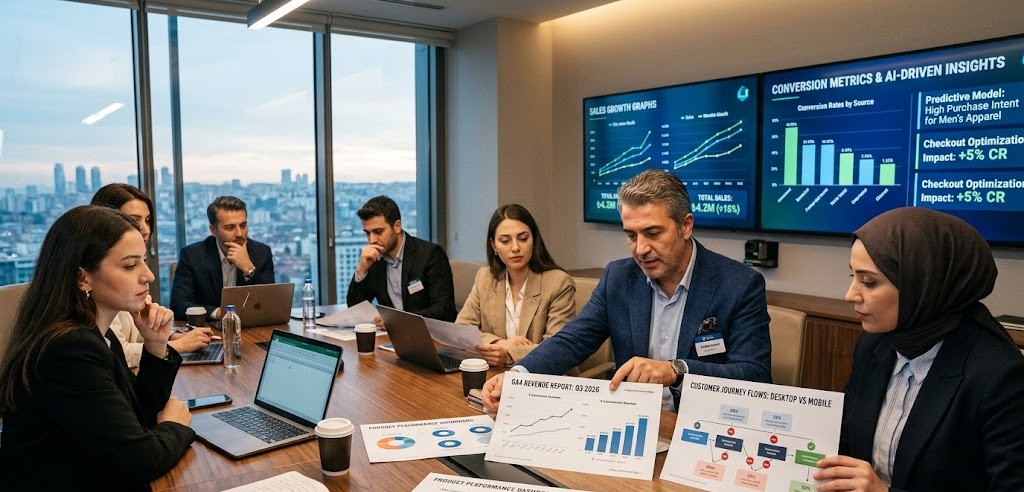
Using GA4 Reports for Better Strategy
Reports should lead to clear action. A useful GA4 setup turns numbers into next steps for content, ads, website design, and sales activity.
Business objectives reports
Business objectives reports organise data around goals such as leads, sales, user behaviour, and brand awareness.
This keeps reporting close to the way teams already think.
Purchase journey and checkout journey
Purchase journey and checkout journey reports show how people move through the buying path.
For e-commerce brands, these reports can guide product pages, delivery messaging, pricing, checkout design, and campaign planning.
Attribution and cross-channel reporting
GA4 attribution shows how channels contribute before a key action. A user may see a post, read a blog, click a search result, and then convert through a paid ad.
Cross-channel reporting gives a wider view of SEO, paid media, referrals, email, social, and AI traffic.
BigQuery export for advanced reporting
GA4 reports work well for many teams. Larger brands may use BigQuery export for deeper analysis.
GA4 ROI reporting becomes stronger when GA4 data connects with CRM, ad spend, margin, or sales data. This creates a clearer view of profit, pipeline, and channel value.
A Practical GA4 Tracking Checklist for Turkish Businesses
Use this checklist as a simple starting point.
Essential setup checks
- Set up GA4 and Google Tag Manager correctly
- Turn on enhanced measurement where it fits
- Use recommended events for leads and e-commerce
- Create custom events for unique actions
- Mark the most valuable actions as key events
- Link GA4 with Google Ads and Search Console
- Set up consent mode
- Exclude internal traffic
- Use clear UTM naming
- Test events before launch
Monthly reporting routine
Each month, review:
- Top acquisition channels
- Organic landing pages
- Paid campaign traffic
- Key event rate
- Lead quality
- E-commerce revenue
- Product performance
- AI Assistant traffic
- Referral traffic from Digital PR
- Consent and tag status
Metrics for leadership teams
Leadership teams need clear numbers. Focus on revenue, qualified leads, key event rate, customer acquisition cost, return on ad spend, market performance, and performance marketing analytics.
Conclusion: Turning GA4 Data Into Clear Growth Direction
GA4 works best when every event has a purpose. Turkish businesses need tracking that reflects real goals, such as leads, sales, authority, market growth, and stronger user journeys.
Clear data can guide better SEO, stronger content, sharper paid media, and more useful reporting. For brands that want tracking tied to wider growth, Pella Global’s Digital Marketing Solutions and Growth Marketing and Insight can shape data into a practical direction.
FAQs About Google Analytics 4 for Turkish Businesses
1. What should Turkish businesses track in GA4 in 2026?
Turkish businesses should track users, engaged sessions, traffic acquisition, landing pages, key events, ecommerce actions, revenue, AI Assistant traffic, and consent settings. These metrics show which channels and pages create value.
2. Is GA4 useful for Turkish e-commerce brands?
Yes. GA4 ecommerce tracking shows product views, cart actions, checkout steps, purchases, item revenue, and customer behaviour across channels. It gives online stores a clearer way to measure product demand and sales paths.
3. What are the key events in GA4?
Key events are actions that matter most to the business. Common examples include purchases, lead forms, sign-ups, bookings, phone clicks, email clicks, and WhatsApp clicks.
4. How does GA4 support international growth?
GA4 shows where global users come from, which markets create strong engagement, and which channels lead to revenue or enquiries. It supports clearer reporting across SEO, paid media, Digital PR, referrals, and AI assistants.
5. Why should Turkish businesses track AI Assistant traffic?
AI Assistant traffic shows visits from tools such as ChatGPT, Gemini, and Claude. This gives teams a better view of how AI search shapes discovery and demand.
At Pella Global, data, search, content, and insight come together to guide clear growth through Google Analytics 4 for Turkish businesses.
