


A strong first party data strategy gives Turkish brands a clearer way to grow in search and ads. It uses the data people share through your own website, CRM, forms, email lists, app, ecommerce store, and sales team. For brands speaking to UK and global buyers, this matters a lot. You get closer to real audience behaviour. You also create better content, cleaner targeting, and stronger measurement.
That is the big shift. Marketing is moving away from loose tracking and moving closer to trusted customer relationships. Turkish brands that act early can build sharper SEO, smarter ads and better buyer journeys.
What Is First-Party Data?
First-party data is information your brand collects directly from people who interact with your own channels. It can come from enquiries, purchases, account sign-ups, newsletter forms, website actions, app activity, calls, events, and CRM notes.
It feels simple because it is close to the customer. A person visits a page, asks a question, downloads a guide, or buys a product. That action tells you something useful.
First-party, zero-party and third-party data in simple terms
Zero-party data is what someone chooses to tell you. Think survey answers, style preferences, or product choices.
First-party data is what you collect through your own channels. Think website visits, form fills, email engagement, purchase history, and CRM data.
Third-party data comes from outside sources. It can expand reach, and first-party data gives more control because it comes from your own audience.
Why owned customer data matters for Turkish brands
Turkish brands often serve more than one market. A clinic in Istanbul may speak to UK patients. A property firm may speak to Gulf and European buyers. A fashion brand may sell through Turkey, the UK, and Germany.
Owned data shows what these buyers actually ask, read, and do. That makes data-driven marketing more practical and less based on guesswork.
Why First-Party Data Matters for SEO and Ads in 2026
Search, ads, and analytics have taken a new turn. People use Google, YouTube, TikTok, Reddit, and AI tools before they choose a brand. Ad platforms also depend more on clean customer signals.
This is where first-party data marketing becomes useful. It gives SEO and paid media teams the same base.
Search behaviour creates stronger content direction
Search data tells you what people type. First-party data tells you what real customers ask before they convert.
That can shape a better blog, FAQ, comparison page, or landing page. For example, a Turkish ecommerce brand may see that UK buyers ask about shipping time, returns, material quality, and sizing. Those questions can become search-friendly content.
Customer signals improve paid media performance
First-party data in Google Ads works best when data is clean, consented, and connected. Google Ads can use customer signals for conversion measurement, audience lists, and bidding.
This is especially useful for brands with long buyer journeys. A B2B lead may speak to sales before becoming a client. Offline sales data can then guide ad platforms towards better leads.
Owned data strengthens long-term brand visibility
Owned data also supports brand authority SEO. When you know what buyers care about, you can publish clearer guides, stronger case studies, and better answer-first pages.
This supports Google rankings, AI search answers, and brand recall across markets.
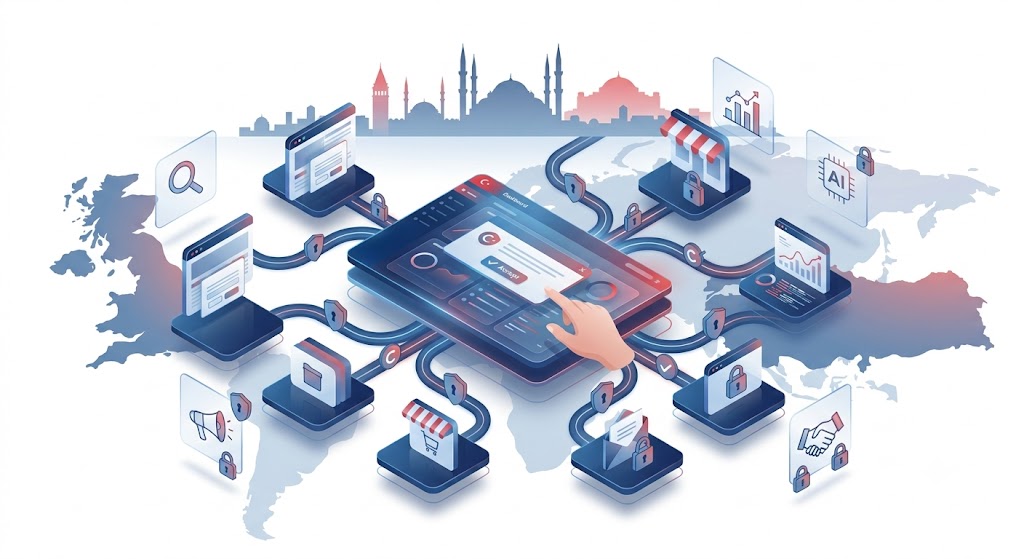
The Privacy Foundation: KVKK, UK GDPR, and Consent
A good data strategy starts with trust. Turkish brands speaking to UK and global audiences need clear consent, simple wording, and clean data handling.
KVKK cookie consent in Turkey and UK cookie guidance both point towards the same idea: people should understand how their data is used.
Cookie consent for Turkish, UK, and global audiences
Advertising, tracking, and profiling cookies need a clear user choice. Strictly necessary cookies can work for core site functions, and marketing cookies need a different level of care.
For a global English site, make the banner easy to read. Explain the purpose. Group cookies clearly. Give users a simple way to manage choices.
Clear value exchange and transparent data use
People share data when the value feels fair. A brand can invite users to sign up for a guide, price alert, consultation, product drop, loyalty benefit, or event invite.
The message should be direct: what the user receives, what data is collected, and how the brand uses it.
Consent Mode, cookie banners and measurement quality
Google Consent Mode sends consent signals from your banner to Google tools. Tags then adapt based on the visitor’s choice.
This does two things. It respects user choices and supports better modelling where consent settings affect measurement. For many Turkish brands running UK campaigns, this is now part of a healthy measurement setup.
First-Party Data Sources Turkish Brands Already Own
Many brands already have useful data. The work is bringing it together.
Website forms, CRM records and customer enquiries
Start with contact forms, WhatsApp leads, call forms, quote requests, and sales notes. These are rich sources because they show commercial intent.
A simple CRM can organise lead source, market, language, service interest and buyer stage.
Ecommerce, loyalty, email and app data
For ecommerce, useful data may include product views, repeat purchases, abandoned baskets, email clicks, discount use, and average order value.
This creates better audience segmentation. New buyers, repeat buyers, high-value buyers and dormant buyers should receive different messages.
Offline sales, events and B2B lead records
Offline data matters too. Events, showroom visits, trade fairs, phone calls and sales meetings can all show what buyers want.
For B2B brands, this is vital. A form fill is a start. A qualified lead or signed deal gives a much stronger signal.
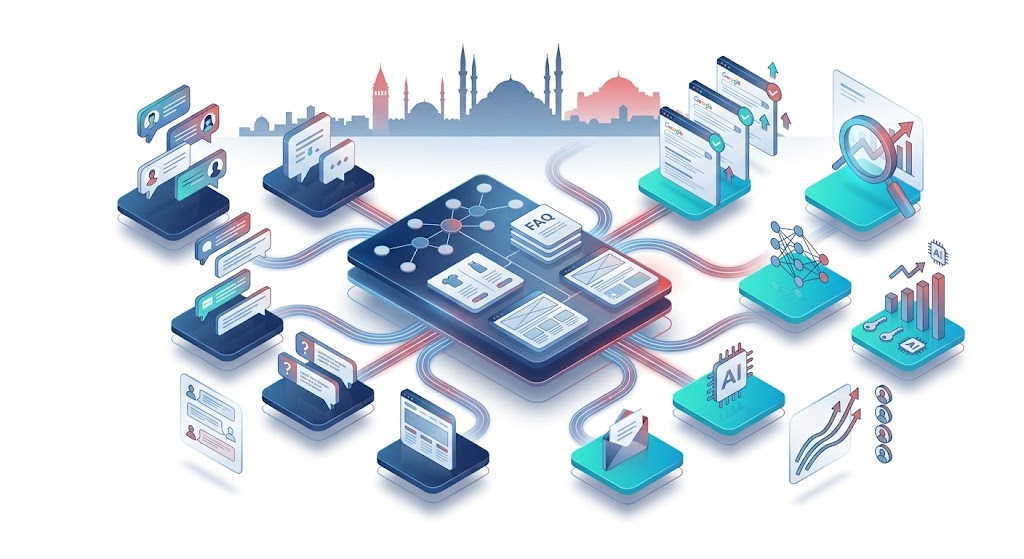
How First-Party Data Strengthens SEO
First-party data for SEO works because it connects search content with real buyer language.
Turning customer questions into search intent clusters
Customer questions can become topic clusters. One main guide can answer the broad question. Smaller pages can answer follow-up questions.
For example, a Turkish tourism brand can build clusters around travel seasons, airport transfers, family stays, halal-friendly trips, and UK traveller FAQs.
Building English content for UK and global buyers
SEO for Turkish brands needs more than translation. It needs the right tone, search intent, and trust signals for global readers.
A UK buyer may want clear prices, process details, location context, and proof. Strong English content should answer these early.
Using CRM insight for FAQs, guides and comparison pages
CRM insight can show repeated buyer questions. These questions make strong FAQs because they match real demand.
Use them for guides, pricing pages, product explainers, and comparison pages. This also supports AEO because answer engines favour clear, direct answers.
Connecting Digital PR, backlinks and brand authority
Digital PR turns useful data into stories. A brand can share trends from customer demand, market insights, or buyer behaviour.
This supports backlinks, media mentions, and stronger authority. At Pella Global, we explore this wider visibility idea in our guide to Search Everywhere Optimisation in Turkey, where we discuss how Google, TikTok, Reddit, and AI all shape discovery.
How First-Party Data Improves Google Ads and Paid Media
A strong paid media account needs more than keywords and ad copy. It needs clean signals.
For brands running performance marketing campaigns in Turkey for UK and global buyers, first-party data can guide budgets towards people with real intent.
Enhanced conversions for stronger measurement
Enhanced conversions use hashed customer data, such as email or phone details, to improve conversion measurement. This can make reporting more accurate when a buyer converts after interacting with an ad.
It is a strong fit for lead forms, ecommerce checkouts, and offline lead journeys.
Customer Match for high-value audience segments
Customer Match lets advertisers use customer data to reach and re-engage people across Google surfaces such as Search, Shopping, YouTube, Gmail, and Display.
A Turkish brand can create lists for past buyers, high-value leads, newsletter subscribers, or returning customers. Each group can receive a message that matches their stage.
GA4, Google Ads Data Manager and CRM connections
GA4 measurement, Google Ads, CRM systems, and Google Ads Data Manager can work together. This creates a better view of source, action, and value.
A strong setup connects the first click, later visits, lead quality, and final sale. That makes reporting more useful for teams and leaders.
Audience segmentation by intent, value and lifecycle stage
Good segmentation keeps campaigns focused. Useful segments include:
- New visitors
- Returning visitors
- Lead form starters
- Past customers
- High-value customers
- Cart abandoners
- Event attendees
- B2B decision-makers
Each group needs a different message, budget, and next step.
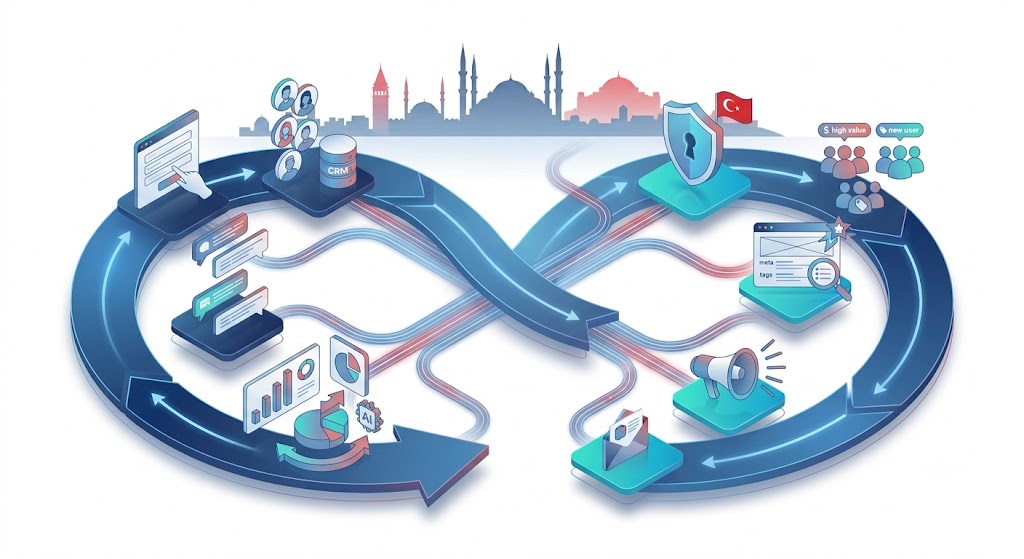
A Practical First-Party Data Framework for Turkish Brands
A clear framework keeps the work simple.
Audit every data source and consent touchpoint
List every place data enters the business. Include forms, checkout pages, CRM, call records, email tools, live chat, events, apps, and sales sheets.
Then review consent wording, cookie settings, privacy pages, and tracking tags.
Organise data inside CRM, analytics and ad platforms
Clean labels matter. Use clear fields for market, language, product interest, lead source, lead quality, and customer value.
This makes customer data strategy easier to use across teams.
Segment audiences around commercial intent
Group audiences by what they want and how close they are to action. A person reading a guide needs education. A person asking for prices needs a faster route to sales.
This simple difference can improve SEO pages and ad groups.
Activate data across SEO, ads, email and remarketing
Use data across the full journey. Search content can attract. Email can nurture. Ads can re-engage. Sales can close. Reporting can show what works.
For campaign execution, Pella Global’s digital advertising solutions connect targeting, Google Ads, Meta Ads, retargeting, and performance tracking.
Measure, refine and scale the strategy
Track what matters: organic leads, conversion rate, assisted conversions, cost per qualified lead, repeat sales, and market-level growth.
For organic growth, our SEO solutions at Pella Global show how technical SEO, content optimisation, keyword research, and internal linking support long-term visibility.
What Turkish Brands Should Prioritise for UK and Global Growth
Turkish brands need data, and they also need clarity. Global buyers want to understand the appeal quickly.
English positioning and trust signals
Use plain English. Show location, team, process, proof, reviews, certifications, case studies, and contact details.
Trust grows when the brand feels easy to understand.
Multilingual SEO and international buyer journeys
International SEO for Turkish brands should map each market. UK users may search in different words from users in Europe, the Gulf, or the United States.
This makes multilingual research, hreflang, local landing pages, and market-based FAQs important.
Sector examples: tourism, ecommerce, property, B2B, and healthcare
Each sector can use owned data in its own way.
Tourism brands can track trip intent. Ecommerce brands can track basket behaviour. Property brands can track location demand. B2B brands can track qualified leads. Healthcare brands can track enquiry themes with careful privacy standards.
How Pella Global Can Shape a Stronger Data-Led Growth Strategy
First-party data works best when SEO, content, digital PR, ads, and reporting move together.
SEO, Digital PR, content and ads working as one system
A customer question can become a blog. The blog can become an ad angle. The ad can create CRM insight. The CRM insight can shape a new landing page.
That is how privacy-led marketing becomes practical. Each channel learns from the other.
From visibility to measurable international growth
The aim is simple: better data, better decisions, and stronger growth.
For Turkish brands, the best results often come from one connected system. It links owned audience data, server-side tracking, consent, content, ads, and reporting. It also supports AI search visibility because clear, structured content is easier for users and answer engines to understand.
FAQs on First-Party Data Strategy for Turkish Brands
1. What is a first-party data strategy?
A first party data strategy is a plan for collecting, organising and using customer data from owned channels. It connects websites, CRMs, email, ecommerce, apps, sales teams, and ad platforms into one clear growth system.
2. Why does first-party data matter for SEO?
First-party data shows what real users ask, read and do. This can guide keyword choices, FAQs, content clusters, comparison pages, and landing pages that match buyer intent.
3. How can Turkish brands use first-party data in Google Ads?
Turkish brands can use first-party data through Customer Match, enhanced conversions, remarketing lists, and CRM-based lead quality signals. This supports stronger targeting, better measurement, and smarter bidding.
4. Does first-party data require consent?
Consent depends on the data type, purpose, and market. For advertising cookies, personalised ads, and profiling, clear user choice is a key part of a safe and trusted setup.
5. Which tools support first-party data activation?
Useful tools include CRM systems, GA4, Google Ads, Google Tag Manager, Consent Mode, email platforms, ecommerce platforms, and Google Ads Data Manager. With the right setup, Turkish brands can turn owned data into a stronger first party data strategy.
