


Structured data for Turkish websites is now a core part of modern search. It gives Google, AI search tools and voice assistants a clearer way to read a page. It shows who a brand is, what a page means, where a business operates and how each piece of content connects to the wider web.
For Turkish brands writing in English for UK and global readers, this matters a lot. Strong copy needs clean signals too. Schema markup gives those signals in a format machines can read.
Understanding Structured Data for Modern Search Systems
Structured data is a labelled layer of code added to a web page. It tells search systems what each page element means. The page may mention a company name, a founder, an address, an article, a product or a review. Structured data turns those details into organised facts.
Most websites use Schema.org vocabulary. Many SEO teams add it through JSON-LD, which sits inside the page code. Google recommends JSON-LD because it is clean, flexible and easier to manage.
For a Turkish brand, structured data works like a digital identity card. It creates stronger search engine understanding schema across home pages, solution pages, blogs and local pages.
Role of structured data in search interpretation
Search engines read words. They also read context. A word like “Pella” could mean different things across the web. Structured data guides the system towards the right meaning.
Organisation schema can connect a brand name with its logo, website, social profiles, contact details and sameAs links. Article schema can connect a blog post with its headline, author, image and date. LocalBusiness schema can connect a Turkish office with its location and opening details.
This is where website entity optimisation begins. The goal is simple. Make every key identity signal clear, repeatable and consistent.
Connection between schema markup and semantic SEO
Semantic SEO focuses on meaning. It goes deeper than matching one keyword to one page. It looks at topics, entities, relationships and user intent.
That is why semantic SEO structured data matters. A blog about PR, for example, can connect to the brand, the author, the topic, related pages and trusted mentions. Search systems can then see the page as part of a wider subject cluster.
This also supports AEO, or answer engine optimisation. AI search tools prefer clean facts, direct answers and clear page sections. Structured data works best with useful content, strong internal links and trusted off-site signals.
Entity Clarity in Turkish Digital Ecosystems
Turkey has a busy digital market. Many brands serve local audiences in Turkish and global audiences in English. That creates a real need for clear entity signals.
A Turkish company may use a Turkish site, an English site, social profiles, news mentions and local listings. Each touchpoint should describe the same brand in the same way.
This is the foundation of entity clarity SEO strategy. It makes the brand easier to understand across search, AI tools and voice assistants.
How search engines interpret brand entities
A brand entity is more than a name. It is the full picture of the business. Search engines connect brand name, language versions, address, social profiles, leadership details, Digital PR mentions, reviews, business listings and topic authority.
Structured data gives these signals a tidy home on the website. It also connects them with external profiles through sameAs links.
For Turkish businesses aiming at UK and global audiences, this can make the English site feel more credible. The reader sees a clear brand. Search systems see a clear entity.
Importance of consistent entity signals across languages
Multilingual websites need careful alignment. The Turkish page and English page can target different readers, yet the brand identity should stay steady.
A company name should appear the same way across both versions. The organisation schema should use the same logo, URL pattern and social links. Hreflang tags should guide search engines to the right language version.
This creates stronger SEO for Turkish domains. It also gives global readers a smoother path from discovery to enquiry.

Schema Markup Architecture for Turkish Websites
Good schema starts with page purpose. Each page should use markup that matches its role. A home page, blog post, office page and solution page all need different structured data.
A clean architecture often includes:
| Page type | Useful schema type | Main purpose |
| Home page | Organisation and WebSite | Define the brand entity |
| Blog post | Article or BlogPosting | Define the content and author |
| Office page | LocalBusiness | Define location and contact details |
| Solution page | Service | Define what the business creates |
| FAQ section | FAQPage | Define direct questions and answers |
This approach supports structured data SEO Turkey because it respects both technical structure and local meaning.
JSON-LD structure for multilingual platforms
JSON-LD works well for multilingual websites because it can be managed through templates. A WordPress, Shopify or custom website can add a base schema to every page, then add page-specific markup where needed.
For JSON-LD implementation Turkey, use a clear pattern:
- Keep the same organisation ID across language versions
- Use the correct URL for each language page
- Add inLanguage values for Turkish and English pages
- Connect author pages and article pages with IDs
- Use sameAs for trusted social and profile links
- Match schema details with visible page content
This keeps the site organised as it grows.
Local business schema for Turkish brands
LocalBusiness schema is useful for brands with a real office, branch or public address. It can show business name, address, area served, opening hours, phone number and map details.
For Turkish companies, this matters across tourism, real estate, healthcare, education, logistics, ecommerce and agency sectors. Address details should match Google Business Profile, website footer, contact page and trusted directories.
Article and organisation schema alignment
Blog content can strengthen brand authority when each article connects back to the organisation. Article schema should include the headline, author, date published, date modified, image and publisher.
For a brand like Pella Global, this creates a neat link between expert content and the wider business entity. It also fits well with Knowledge Graph optimisation for Turkish brands, which explores how entity authority grows through structured signals, content and trusted mentions.

Strengthening Knowledge Graph Visibility
A knowledge graph connects facts. It can link a company to its website, sector, founders, locations, articles, social profiles, products and public mentions.
For Turkish brands, knowledge graph optimisation is about making these links easy to find. Structured data, clear copy and Digital PR all play a part.
Entity relationships and structured signals
Search systems understand more when relationships are clear. A brand connects to a service area. A blog connects to a topic. An author connects to expertise. A case study connects to a sector.
Schema can show these links through properties such as sameAs, author, publisher, about, mentions and mainEntityOfPage. The goal is to build a clean map of meaning across the website.
This also supports AI search. Tools that summarise pages need fast access to names, topics, dates and facts. Clear structure gives them a better route through the content.
Building authority through connected data
Authority grows through repetition and trust. The website should say one thing clearly. Social profiles should support it. Media mentions should echo it. Business directories should align with it.
That is where structured data meets Digital PR. Digital PR can create credible third-party mentions. Schema can then connect the brand website with its public footprint.
This creates stronger brand recall in search and stronger credibility with readers.
SEO Advantages for Turkish-English Hybrid Websites
Many Turkish brands now sell, promote or communicate across borders. A hybrid website needs more than translation. It needs structure, local context for Turkey and clear language for global readers.
Cross-language structured data alignment
Structured data can support cross-language alignment in several ways:
- Use inLanguage for each page
- Add hreflang correctly
- Keep brand facts consistent
- Link equivalent Turkish and English pages
- Use English schema values on English pages
- Use Turkish schema values on Turkish pages
This makes the language setup cleaner. It also reduces mixed signals between page versions.
International search visibility framework
A global audience brings different search habits. UK readers may search with different terms than Turkish readers. A page about “real estate” may need to speak to “property”. A page about “PR” may need to explain public relations in a practical way.
Structured data supports the technical layer. Content supports the human layer. Together, they create a better path for technical SEO for Turkish websites.
For brands planning global visibility, Pella Global’s SEO solutions connect technical analysis, keyword strategy, content structure and long-term search growth.
Best Practices for Structured Data Implementation
Structured data should feel boring in the best way. Clean. Accurate. Repeatable. Easy to update.
Start with the core pages. Add organisation schema to the home page, Article schema to blog posts, LocalBusiness schema to office pages and FAQ schema where visible FAQs appear.
Clean data hierarchy and consistency
The strongest setup uses a clear hierarchy. The website has one main organisation entity. Each page connects to that entity. Each article connects to an author and publisher. Each solution page connects to a relevant business request and audience need.
Use IDs inside JSON-LD. This lets different schema blocks connect cleanly. For example, the organisation ID can appear as the publisher across blog posts.
Keep names and URLs steady. Small changes across many pages can reduce clarity.
Validation using schema testing tools
Testing should be part of every launch. Google Rich Results Test can show rich result eligibility. Schema Markup Validator can review Schema.org structure. Google Search Console can show enhancement reports after crawling.
A good review looks at valid schema types, required fields, matching visible content, correct URLs, language values, clean publisher details and accurate date modified values.
This keeps the markup reliable after website updates.
Maintaining scalable structured architecture
Structured data should scale with the site. A growing Turkish website may add new blogs, office pages, products, solution pages and case studies.
Templates make this easier. The development team can create rules for each page type. The SEO team can review output before launch. Content teams can keep titles, authors, dates and FAQs clean.
This creates a system rather than one-off code edits.
Strategic Impact on Brand Authority and Visibility
Structured data works quietly. Readers rarely see it. Search systems read it every time they crawl the page.
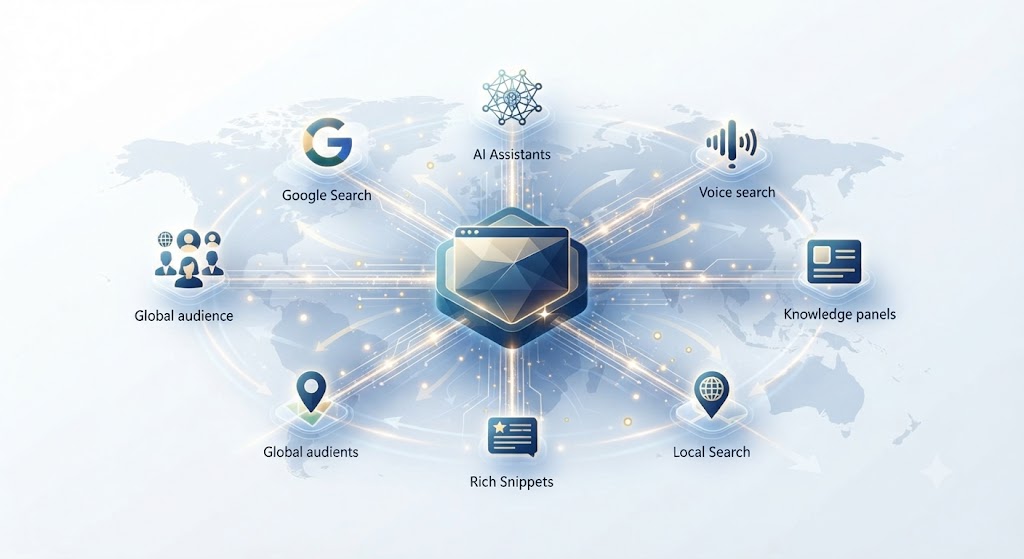
For Turkish brands, that quiet layer can shape how the brand appears across search results, AI answers, local discovery and knowledge panels. It can also support reputation work because the brand story becomes easier to read from several trusted places.
Search comprehension improvement
Search comprehension means a search engine can understand the page with less guesswork. It can see the page type, publisher, subject, author, language and business details.
This matters for brand authority signals. Strong pages should show who wrote the content, who published it, what topic it covers and how it connects to the brand.
A clear page also works better for featured snippets, AI answers and voice search. Short paragraphs, direct answers, FAQs and structured data all support the same goal.
Long-term visibility reinforcement
Structured data is a long-term asset. It grows stronger when the website stays consistent.
A brand that keeps its schema clean across months and years builds a more reliable digital footprint. This supports organic search, AI search, digital PR, and global brand positioning.
FAQs on Structured Data for Turkish Websites
What is structured data for Turkish websites?
Structured data for Turkish websites is code that labels key details on a page, such as business name, author, location, article topic, and contact details. It gives search engines a cleaner way to understand Turkish and English pages.
Which schema types should a Turkish business use first?
Start with Organisation, WebSite, Article, and LocalBusiness schema. Add Service and FAQPage schema where the page content clearly supports them. This gives the site a solid base for entity clarity.
Does schema markup improve AI search visibility?
Schema markup can support AI search visibility by making facts easier to classify and retrieve. It works best with clear content, strong internal links, trusted mentions and fast technical performance.
Conclusion: Clear Data Builds Clear Brands
Structured data is more than code. It is a way to tell search systems who a brand is and why each page matters.
For Turkish brands targeting UK and global audiences, that clarity can support stronger rankings, richer search features, AI visibility and brand trust. The best results come from a joined approach: clean JSON-LD, useful content, aligned language pages, Digital PR and technical SEO.
At Pella Global, the team creates connected SEO, content and Digital PR strategies for brands that want stronger visibility across Turkey and global markets. That is the value of structured data for Turkish websites.
