


What is PR? PR, or public relations, is the process of managing trust-based communication between a brand, organization, or public figure and its audience. Its main purpose is to shape perception, strengthen credibility, and support long-term reputation management.
Today, PR is no longer limited to media exposure alone. It also includes crisis communication, message development, digital visibility, and the strategic management of how a brand is perceived across different platforms. When planned correctly, public relations helps brands build trust that lasts.
This guide explains PR meaning, the role of public relations in modern communication, and why it remains one of the most important disciplines for brands that want to build authority and long-term value.

What Is PR?
PR (Public Relations) is the strategic management of communication between a brand, institution, or individual and its target audience. In practice, it is about creating a strong relationship built on credibility, consistency, and trust.
The focus of PR is not direct sales. It is perception, communication, and reputation management. A strong PR strategy helps a brand communicate the right message, at the right time, through the right channels, while protecting its position in the public eye.
In simple terms, PR helps manage how a brand is understood, remembered, and trusted.
What Does Public Relations Mean?
Public relations refers to the communication process through which an organization builds understanding and trust with its audience. This includes not only customers, but also media professionals, employees, business partners, investors, and the wider public.
Although PR and public relations are often used in the same way, public relations can be understood as the broader communication discipline, while PR refers more directly to the strategic, managed side of that work.
At its core, public relations is about strengthening how a brand is perceived and helping it build a lasting reputation.
What Is the Main Purpose of PR?
The main purpose of PR is to build and protect a strong brand reputation over time. This involves establishing trust, creating the right perception, and maintaining healthy communication with the people who matter most to the brand.
Unlike short-term promotional tactics, PR focuses on long-term value. It supports visibility, but its deeper role is to position a brand as reliable, credible, and professionally managed.
That is why successful PR is not just about being seen. It is about being respected.
What Areas Does PR Cover?
PR is a broad communication discipline that goes far beyond traditional press visibility. Effective public relations can include several connected areas:
- Media relations: Building communication with journalists, editors, and media platforms.
- Crisis communication: Managing sensitive moments with clarity, speed, and control.
- Reputation management: Strengthening how the brand is perceived over time.
- Digital visibility: Supporting brand presence across digital channels and online conversations.
- Internal communication: Strengthening communication between an organization and its employees or internal stakeholders.
When these areas work together, they help create a stronger and more credible public image.
The Difference Between PR and Advertising
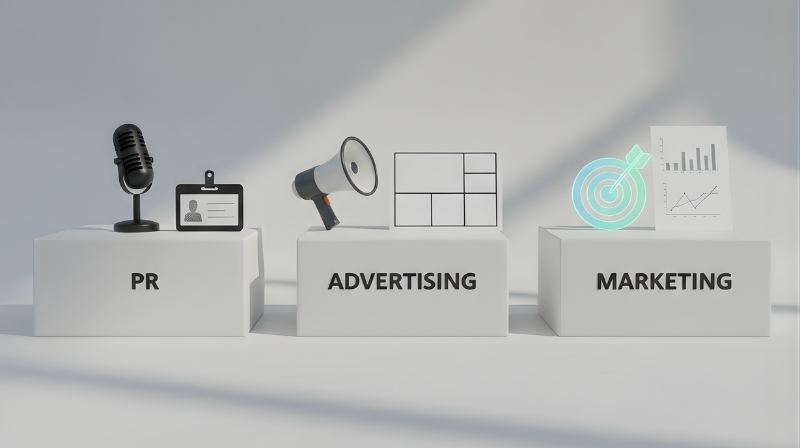
The difference between PR and advertising is one of purpose, control, and credibility.
Advertising is a paid communication method. A brand decides what to say, where to say it, and when it will appear. It is often used to increase awareness, visibility, or short-term campaign performance.
PR, on the other hand, is based on trust and earned attention. Instead of paying directly for placement, brands build credibility through stories, media coverage, interviews, expert positioning, and strategic communication. This makes PR especially valuable for long-term brand strength.
In short, advertising buys visibility. PR builds trust around that visibility.
The Difference Between PR and Marketing
The difference between PR and marketing is mainly about focus.
Marketing is designed to generate demand and support sales. It includes areas such as campaigns, pricing, promotion, product positioning, and customer acquisition. Its results are often measured through performance metrics tied to growth and conversion.
PR focuses on perception, trust, and reputation. It helps shape how people think and feel about a brand before, during, and after they engage with it. That is why PR supports the long-term strength behind marketing efforts.
For brands that want stronger visibility and stronger credibility, PR and marketing should work together. At Pella Global, communication strategies are approached holistically so that growth goals and long-term brand value can support each other.
The Impact of PR on Brand Value
PR influences more than visibility. It affects how valuable a brand is perceived to be.
Consistent communication, positive media presence, clear messaging, and trust-building efforts all strengthen a brand’s authority. Over time, this creates stronger loyalty, higher credibility, and more durable preference in the market.
That is why reputation management is not a side effect of PR. It is one of its central outcomes. A well-managed PR process helps brands create value that continues long after individual campaigns end.
The Evolution of PR Today
Modern PR has evolved significantly with digital transformation. Traditional media still matters, but today’s communication environment also includes search engines, online publications, social media platforms, creator ecosystems, and branded digital content.
This shift has made Digital PR increasingly important. Brands now need to manage not only what is said about them, but also where, how, and in what context those messages appear online.
As the speed of information increases, message control becomes more strategic. A brand can be strengthened or challenged in a very short time, which makes planned communication more essential than ever.
For brands looking to strengthen online authority and visibility, Digital PR plays an important role in combining trust, reach, and measurable impact.

Why Is PR a Strategic Communication Discipline?
PR is strategic because it is not based on random exposure. It is built around clear goals, clear audiences, and carefully planned communication.
A strong PR strategy decides what message should be shared, who should hear it, when it should appear, and how it should support the broader position of the brand. It also helps brands prepare for sensitive situations before they become larger reputation issues.
For this reason, public relations is not only about getting attention. It is about managing communication with discipline, clarity, and long-term intent.
Brands that approach PR strategically are better positioned to build trust, protect credibility, and grow with consistency.
Frequently Asked Questions
What is PR, briefly?
PR is the process of managing a brand’s communication and public perception through trust-based, strategic messaging.
Are PR and public relations the same thing?
They are often used interchangeably. In practice, public relations is the broader concept, while PR usually refers to the strategic execution of that communication process.
Is PR the same as advertising?
No. Advertising is paid placement, while PR is based on trust, earned visibility, and long-term relationship building.
Why is PR important?
PR is important because it helps brands build credibility, manage perception, protect reputation, and create long-term value.
Strategic Digital Power for Brands and Individuals
For brands and individuals who want to build a more professional, sustainable, and effective structure in digital channels, the right strategy makes all the difference. At Pella Global, we strengthen brands through a holistic approach that combines communication, visibility, and long-term brand value. From strategic messaging to performance-driven digital growth, our goal is to help brands become more visible, more trusted, and more influential over time.
Brands that want to strengthen authority, improve media presence, and develop a stronger long-term communication strategy can also explore our PR services for a broader view of how strategic public relations supports sustainable growth.
