


Website migration SEO protects search visibility while a website changes its design, domain, platform, hosting, URLs, or language structure. For Turkish brands targeting the UK and global markets, that work begins before a designer moves a button or a developer writes new code. The aim is clear: keep valuable search signals connected while the website becomes faster, clearer, and easier to use. That is why website redesign SEO belongs in the project brief from day one.
A migration may involve a redesign, a new platform, a new domain, a revised folder structure, or a fresh Turkish and English setup. Search engines already understand the current pages. The new website needs to carry that meaning forward.
This guide explains how to build a website migration strategy, protect organic traffic, and launch a stronger website for local and international growth.
What Does Website Migration SEO Mean for Turkish Brands?
Website migration SEO brings design, development, content, analytics, and search performance into one plan. It shows which pages matter, where each URL should lead, and which signals must stay aligned.
Website Redesign, Platform Migration, and Domain Migration
A redesign changes the visual experience. A CMS migration changes the system behind the website. A domain migration SEO project moves the site to a new web address. Some projects include all three.
A Turkish retailer may move to Shopify. A clinic may redesign its English site for UK patients. A manufacturer may combine several sites into one global domain. Each move changes how users and search engines reach content.
The Difference Between a Redesign and a Full Website Move
A redesign may keep the same URLs and page structure. A full move may change URLs, templates, copy, canonicals, and language folders. A clear SEO website migration plan keeps each change documented and tested.
Why UK and Global Visibility Need an International Plan
An English website for a Turkish company needs local context. UK readers use different terms, spelling, examples, and decision cues. Language folders, hreflang, localised copy, and clear company details create a stronger route into UK and global search.
Why Can Rankings Shift During a Website Migration?
Rankings can move while Google crawls the new pages and processes new signals. This movement is common during a major site migration SEO project. Careful preparation keeps the transition focused.
Search Engines Need to Crawl and Process the New Setup
Google needs to discover new URLs, follow redirects, read the content, review canonicals, and understand internal links. A new sitemap and clean redirects support discovery, while Search Console shows how the move progresses.
Search Signals That Need Continuity
The main signals include:
- Page URLs
- Titles and headings
- Main copy
- Internal links
- Backlinks
- Canonical tags
- Hreflang tags
- Structured data
- Image URLs and alt text
- Mobile performance
- Conversion tracking
A smooth migration keeps these elements connected through launch.
Pre-Migration SEO Planning Before Design Begins
Strong migration work starts with evidence. The current website holds useful data about what attracts visitors, enquiries, bookings, and sales.
Set the Scope, Owners, Launch Window, and Success Measures
Record what will change, what will stay stable, who owns each task, and how progress will be measured. Choose a launch window that suits the business cycle, away from peak booking or sales periods where possible.
Benchmark Rankings, Traffic, Conversions, and Core Web Vitals
Save current data from Search Console, GA4, rank trackers, and sales systems. Record clicks, impressions, queries, conversions, revenue, priority pages, and Core Web Vitals. This baseline shows how the new site performs against the current one.
Crawl the Current Website and Build a URL Inventory
A full crawl creates the foundation for the website migration checklist. Include pages, images, PDFs, videos, canonicals, hreflang, status codes, titles, headings, and internal links.
Add URLs from sitemaps, Search Console, GA4, backlink tools, paid campaigns, email, and social profiles. This wider view catches valuable pages that a standard crawl may miss and shapes a practical SEO migration checklist.
Mark High-Value Pages and Backlink Destinations
Mark pages that drive traffic, leads, sales, links, or branded visibility. A page with modest traffic may still hold a valuable backlink from a UK publication, so redirect mapping should reflect its authority.
Decide What Stays, Combines, Redirects, or Retires
Review every page by purpose. Strong pages can stay, similar pages can combine, and older pages can move to the closest useful destination. Content and SEO teams should make these choices together.
Build and Test the New Website for SEO
The staging website is where the migration becomes real. Every page, redirect, tag, and tracking event should be tested before launch.
Create a Protected Staging Environment
Use password protection or IP access for private testing. A temporary public hostname can use a noindex tag during development, with removal listed for launch. Test mobile pages, forms, downloads, checkout, search tools, and language switching.
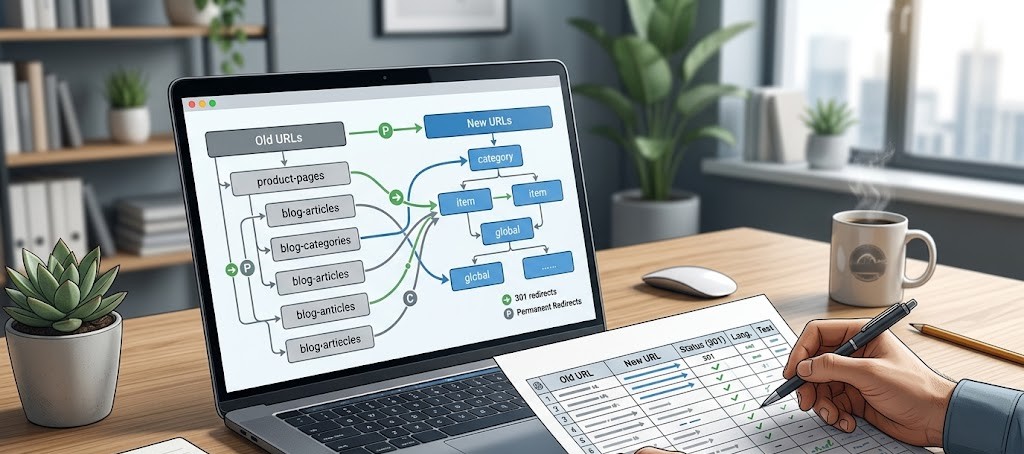
Create an Old-to-New URL Map
A URL mapping sheet should connect every old URL to its final destination. Useful columns include:
| Old URL | New URL | Page type | Redirect | Canonical | Language | Test status |
| /old-page | /new-page | Solution page | 301 | Self | EN | Passed |
| /tr/eski-sayfa | /tr/yeni-sayfa | Blog | 301 | Self | TR | Passed |
This file becomes the shared source for every project team.
Set Permanent Redirects to the Closest Relevant Destination
Use server-side 301 redirects or 308 redirects for permanent moves. Send each old page to the closest matching new page. Avoid routing unrelated pages to the home page. Keep redirect chains short, ideally old URL to final URL in one step.
Preserve On-Page and Technical Signals
Review titles, meta descriptions, headings, copy, alt text, canonicals, structured data, breadcrumbs, pagination, and internal links. Improve them while preserving the search intent that made each page valuable.
Test Mobile Performance and Core Web Vitals
Test the new site on real phones and varied connection speeds. Aim for:
- LCP within 2.5 seconds
- INP below 200 milliseconds
- CLS below 0.1
Large images, heavy scripts, and third-party tools can slow a new design. Test performance throughout development.
For a deeper view of speed and international user experience, Pella Global’s Core Web Vitals and INP in Turkey guide adds useful context.
Test Forms, Ecommerce Journeys, Analytics, and Consent Controls
Test enquiry forms, payments, booking tools, account areas, thank-you pages, and CRM connections. Check GA4, Google Tag Manager, advertising tags, consent settings, and conversion events.
Launch-Day Website Migration SEO Checklist
Launch day should follow a written sequence. That keeps design, development, content, and SEO teams aligned.
Activate Redirects and Crawl the Live Website
Activate the redirect file, then crawl the live website. Test priority pages, backlink destinations, Turkish pages, English pages, files, and campaign links. Each redirect should reach a relevant live page in one step.
Remove Staging Indexing Controls
Remove password protection and temporary noindex tags. Review robots.txt, HTTP headers, CDN rules, and firewall settings so approved crawlers can reach the live site.
Update Canonicals, Hreflang, Internal Links, and Sitemaps
Point canonicals and internal links to final live URLs. Update hreflang references and submit a clean XML sitemap containing canonical URLs. This forms the core of a strong technical SEO migration.
Submit Search Console Signals
Verify old and new properties in Search Console. Submit the sitemap, inspect priority URLs, and use the Change of Address tool for a domain or subdomain move. Keep the old property active for comparison.
Update External and Campaign Destinations
Update paid adverts, social profiles, Google Business Profile, email templates, directories, affiliate pages, and major backlinks. Direct links create a faster user journey.
Turkish-English Website Migration for UK and Global Audiences
A multilingual website migration needs its own plan. Turkish and English pages may share a brand while serving different search intent. This is also a form of international SEO migration.
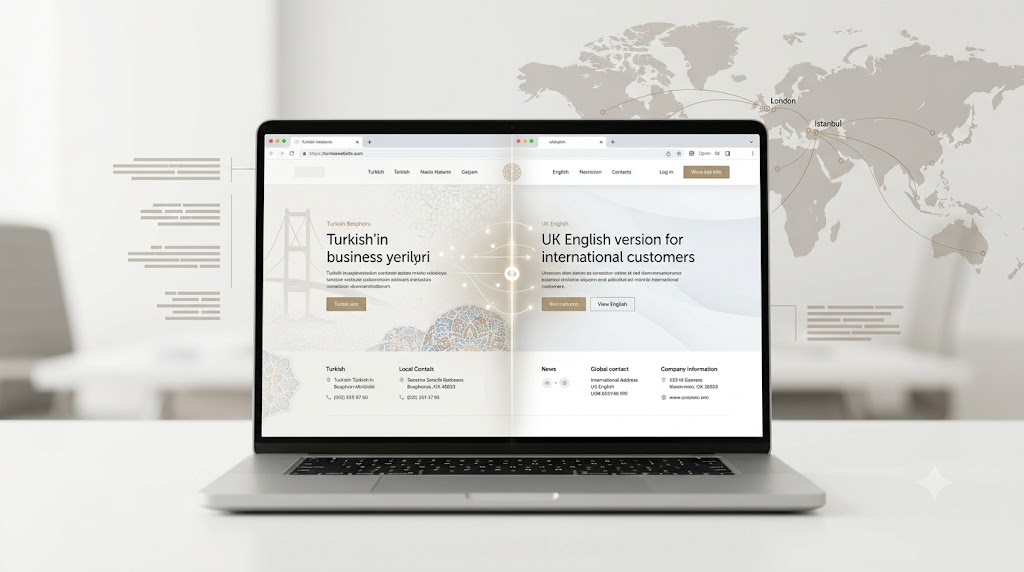
Preserve a Clear Language and Market Structure
Choose one stable structure, such as:
- example.com/tr/
- example.com/en/
- tr.example.com
- en.example.com
The right choice depends on current authority, platform, team, and market strategy.
Update Every Hreflang Relationship
Each language version should reference itself and its matching alternatives. Use full URLs and accurate codes such as tr, en, or en-gb. The Turkish and English pages should reference each other.
Pella Global’s guide to multilingual AI SEO for Turkish websites explores how local intent, language architecture, and international search work together.
Localise English Pages for UK Search Behaviour
Use UK spelling and familiar language. Add local examples, travel details, shipping terms, pricing context, certifications, and case studies. State the Turkish location clearly and give global readers direct contact routes.
Align Schema, Company Facts, and Market Signals
For strong Turkish website SEO, keep the organisation name, logo, addresses, social profiles, author details, and contact information consistent across both languages. Update structured data with the new URLs and suitable schema types.
Post-Migration SEO Monitoring During the First 30 Days
A migration continues after launch. The first month shows how users, search engines, and tracking systems respond. A focused post-migration SEO audit turns that response into clear actions.

First 24 to 48 Hours
Crawl the live site. Test redirects, forms, checkout, tracking, canonicals, hreflang, and priority pages. Review server logs and confirm Googlebot access.
First Week
Track indexed URLs, clicks, impressions, rankings, conversions, Core Web Vitals, and crawl activity. Compare Turkish and English sections separately and review patterns across several days.
Weeks Two to Four
Compare old and new landing pages. Strengthen internal links, update major backlinks, and review UK traffic, global traffic, lead quality, and conversions. Keep permanent redirects active for at least one year.
Migration Success Measures
Use a balanced scorecard:
- Organic clicks and impressions
- Indexed priority pages
- Keyword visibility
- Leads, bookings, or sales
- Conversion rate
- Page speed
- Crawl activity
- Backlink continuity
- UK and global performance
Rankings matter. Business actions show whether the new website truly works.
How Pella Global Can Guide a Search-Safe Website Move
A migration works best when strategy, design, development, content, and measurement move together.
SEO, Web Design, Content, and Analytics in One System
For SEO for Turkish brands, Pella Global connects SEO solutions with web design and development. This joined approach keeps keyword intent, technical structure, user experience, and tracking aligned from planning through launch.
The team can map URLs, shape architecture, localise English content, test signals, and monitor performance.
From Turkish Market Strength to Global Visibility
Turkish brands often begin with strong local knowledge. A well-planned migration turns that strength into a clearer global experience that guides users towards enquiry, booking, or purchase.
Frequently Asked Questions
What Is Website Migration SEO?
Website migration SEO is the process of preserving search visibility while a website changes its design, domain, platform, URLs, hosting, or language structure. It connects the old website’s valuable signals with the new setup.
How Long Does a Website Migration Take to Settle in Google?
The timing depends on website size, crawl activity, redirect quality, and the scale of change. A smaller site may settle within weeks, while a large international site can take longer to process fully.
Should Every Old URL Receive a 301 Redirect?
Every valuable old URL should lead to the closest relevant live destination. Pages with traffic, backlinks, rankings, campaign use, or business value deserve direct mapping.
When Should a Turkish Brand Use the Change of Address Tool?
Use the tool for a move from one domain or subdomain to another. A move from HTTP to HTTPS uses redirects, updated canonicals, and sitemap submission instead.
How Should Hreflang Tags Be Handled During a Turkish-English Migration?
Update each hreflang set with the final live URLs. Each page should reference itself and its matching language alternatives through reciprocal, fully qualified links.
Conclusion: A Stronger Website Starts With a Clear Migration Plan
A redesign should preserve search meaning, improve speed, strengthen content, and make each journey easier. Early planning gives every team a shared map. Redirects protect valuable paths. Localised English pages support UK audiences. Clean tracking shows what follows after launch.
At Pella Global, we bring SEO, web development, content, and analytics into one connected strategy for Turkish brands seeking wider visibility. A stronger global website begins with disciplined website migration SEO.
