

Multilingual AI SEO gives Turkish websites a clear route into UK and global search results. It brings language, local search intent, technical SEO and AI discovery into one plan. A strong multilingual SEO Turkey strategy goes further than translating a Turkish page into English. It shapes each page around the way people search, compare and decide in each market.
A hotel in Antalya, a manufacturer in Bursa and a software company in Istanbul may all need English pages. Each business still speaks to a different buyer.
What Is Multilingual AI SEO?
Multilingual AI SEO is the process of optimising website content for several languages and for search experiences powered by AI. It aims to make every language version easy to crawl, understand, rank and quote.
The work covers classic search results, Google AI Overviews, AI Mode, ChatGPT search, Claude and other answer tools. It also covers the human side of the journey. People still want useful pages, clear facts and a brand they can trust.
Multilingual SEO vs International SEO
Multilingual website SEO focuses on language. International search optimisation may also focus on country, region, currency and local buying habits.
A Turkish and English website is multilingual. A website with separate English pages for the UK, United States and UAE takes a wider international approach. The pages may share one language, while spelling, pricing, delivery terms and search intent change across each market.
Where AI Fits into Global Search
AI search adds a new layer to discovery. People can ask a full question and receive a combined answer drawn from several web sources.
Google also uses related searches to explore a topic from several angles. These reward pages that cover the real subject with depth. Repeating one phrase many times creates little value. Clear explanations, first-hand insight and useful examples create a stronger result.
Why Turkish Websites Need a Global SEO Strategy
A Turkish website can carry strong local authority and still feel distant to an overseas buyer. A global SEO strategy connects local expertise with the language and expectations of each target audience.
This matters for brands in tourism, healthcare, property, ecommerce, manufacturing, fashion and technology. These sectors often attract people who research across borders before making contact.
Connecting Turkish Expertise with Global Demand
Turkey has strong commercial stories to tell. Factories, clinics and hotels can turn local expertise into clear search content for overseas audiences.
English pages should answer the questions global buyers ask. They should explain location, process, credentials, delivery, pricing context and next steps. This creates trust before a call or enquiry begins.
Search Behaviour Changes Across Markets
Search language changes from one country to the next. A UK shopper may use “trainers”, while a US shopper searches for “sneakers”. A UK business may search for “holiday packages”, while another market uses “vacation packages”.
The same pattern applies to specialist sectors. English SEO for Turkish businesses needs local vocabulary, local spelling and local intent. A literal translation may sound correct and still miss the phrase people type into search.
Choose Target Markets Before Translating Content
Start with the market, then choose the language version. This keeps the website aligned with real commercial demand.
A company may begin with UK English because it already receives UK enquiries. Another may focus on Germany, the Gulf or North America. The right starting point comes from data, customer records and business goals.
Review Demand, Competition and Commercial Intent
Review traffic by country, existing leads, sales records and product demand. Study which markets already recognise the brand.
Then review search results. Look at the businesses ranking, the page types that appear and the language used in titles. This shows whether the audience wants a guide, category page, local landing page, product page or comparison.
Build a Keyword Map for Every Language
International keyword research should happen inside each target market. Start with one main topic and group related questions around it. Then match each cluster to the page that can answer it best.
For example, a Turkish furniture maker may target:
- Bespoke hotel furniture in the UK
- Contract furniture manufacturer in Turkey
- Turkish furniture supplier for European projects
- Custom hospitality furniture production
This localised keyword research creates pages with a clear purpose. It also keeps several pages from competing for the same search phrase. 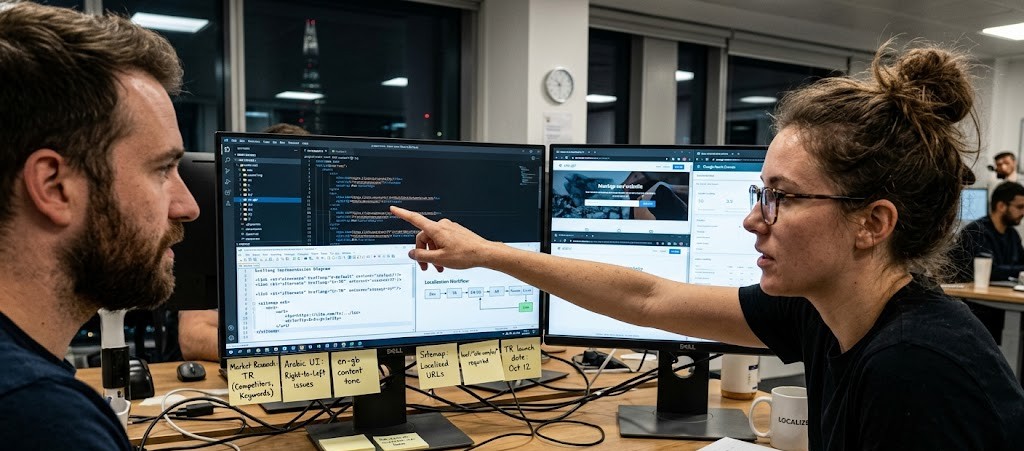
Build the Technical Foundation for Turkish and English Pages
Strong content needs a clean technical base. Search engines need to find each page, identify its language and connect it with the right version.
Choose a Clear Multilingual URL Structure
A multilingual URL structure can use subdirectories, subdomains or country domains.
| Structure | Example | Best use |
| Subdirectory | example.com/en/ | Shared authority and simple management |
| Subdomain | en.example.com | Separate teams or platforms |
| Country domain | example.co.uk | Strong country focus |
Subdirectories often suit Turkish businesses managing several languages on one main domain. They keep pages together and make internal linking easier.
Connect Equivalent Pages with Hreflang
Hreflang for Turkish and English websites tells Google which pages are language or regional versions of the same content. A Turkish page may use tr-TR. A UK English page may use en-GB. A general language selector can use x-default.
Each matching page should reference itself and its partner pages. Those references should also point back to one another. Google reads the visible page text to identify language, so each version still needs clear and complete copy.
Align Canonicals, Sitemaps and Language Navigation
Each language page should usually carry a canonical tag that points to itself. The English page keeps its English canonical, while the Turkish page keeps its Turkish canonical.
Add the preferred language URLs to the XML sitemap. Use a visible language switcher as well. This gives visitors a direct way to move between versions and keeps every language path easy to reach.
Keep Each Page in One Clear Language
One page should speak one language from top to bottom. That includes menus, forms, buttons, image text, metadata and legal copy.
Mixed-language pages create a scattered reading experience. A clean version feels local and makes the next action clear. English internal links should also lead to English destination pages wherever an equivalent page exists.
Use AI to Scale Localisation with Human Editorial Control
AI can speed up research and production. Human editors shape the final meaning, tone and market fit.
This balance matters because a polished translation can still sound distant. A native reader will notice stiff wording, odd phrases and generic claims quickly.
Create a Multilingual Content Workflow
A practical workflow can follow these stages:
- Research the market and search intent.
- Build the keyword and page map.
- Create a first draft or translation.
- Edit for local language and brand voice.
- Check facts, links and technical elements.
- Publish and review performance.
- Refresh pages as demand changes.
This structure keeps multilingual content strategy organised across writers, editors, SEO teams and developers.
Localise Search Intent and Brand Voice
Website localisation changes more than words. It adjusts examples, units, dates, spelling, currency, proof and calls to action.
A UK audience may expect British spelling and direct practical detail. A Gulf audience may value regional experience and bilingual access. A healthcare audience may need credentials and journey details near the top of the page.
Maintain Term Banks and Editorial Standards
Create an approved term bank for product names, sector phrases and brand language. Add tone rules, spelling choices and examples of preferred calls to action.
This gives every editor a shared reference. It also creates stronger consistency across blog posts, landing pages, emails and social content. 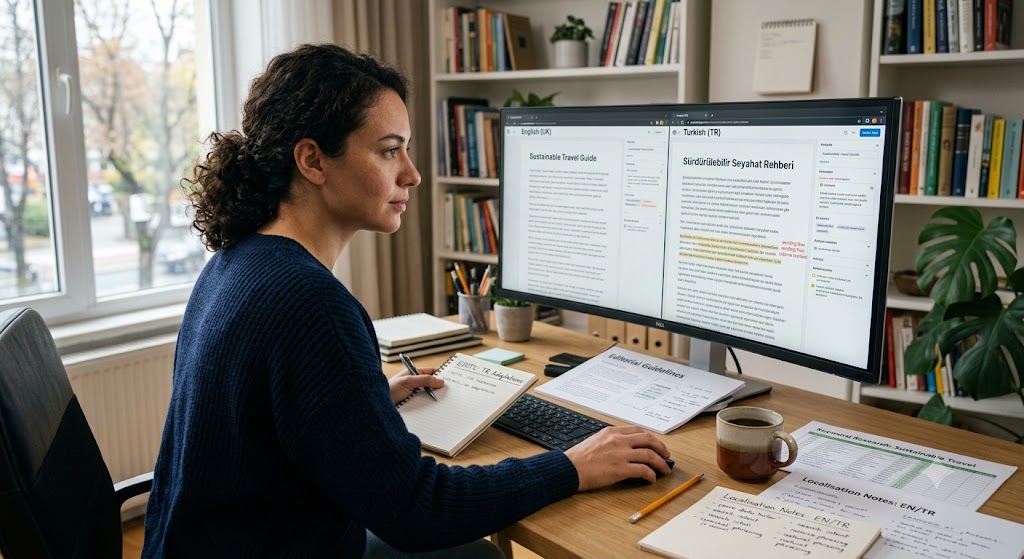
Prepare Multilingual Content for Google and AI Search
AI search optimisation begins with sound SEO. Search systems need access to the page before they can assess or cite it.
Keep Priority Pages Crawlable and Indexable
Important pages should load well on mobile, use readable HTML text and sit within a clear internal-link path. Titles, headings and page copy should match the main purpose.
A sitemap can guide discovery. Search Console can show indexing activity. Strong page speed and clean navigation also create a smoother experience for visitors across different countries and devices.
Manage Googlebot, OAI-SearchBot and Claude-SearchBot
Website owners can review crawler access in robots.txt. Googlebot supports Google Search discovery. OAI-SearchBot supports visibility in ChatGPT search. Claude-SearchBot supports Claude search discovery.
These crawlers serve different roles from bots linked with model development. Pella’s AI crawler guide for Turkish brands explains the main crawler names and their connection with visibility.
Structure Answers for AI Retrieval
AI systems can lift a useful passage from the middle of a page. Make each section clear enough to stand on its own and natural enough to read as part of the full article.
Useful formats include:
- A direct definition near the start
- Short steps for a process
- Tables for clear comparisons
- Specific examples from real sectors
- FAQs written in natural language
- Original insight from local experience
This supports answer engine optimisation and generative engine optimisation while keeping the reader at the centre.
Add Structured Data and Consistent Entity Signals
Structured data can clarify the type of page and the organisation behind it. Relevant formats may include ‘Organisation’, ‘Article’, ‘BreadcrumbList’, ‘Product’ and ‘LocalBusiness’.
Keep the company name, logo, address, authors, social profiles and business description consistent across languages. This strengthens multilingual brand authority and makes the brand easier for search systems to understand.

Build Authority in Every Target Market
A translated website gains more weight when trusted sources in the target market mention it. Authority needs a local shape.
Earn Local Links and Media Mentions
Seek relevant links from industry publications, trade bodies, partners, directories and sector websites. Use expert commentary, original research, interviews and case studies to create a clear reason for coverage.
A link from a respected UK industry source may carry more local meaning for a UK campaign than a broad link from an unrelated market.
Connect Digital PR with Multilingual SEO
International Digital PR connects the brand with the topics, markets and sectors it wants to own. It can build media mentions, expert profiles and branded search demand across several countries.
This work becomes stronger when PR stories link to useful localised pages. Pella’s SEO solutions and content marketing solutions can bring technical structure, editorial planning and authority into one connected direction.
Measure Multilingual AI SEO Performance
Measure each language and country on its own. A total traffic figure can hide where real growth is happening.
Track Results by Language and Country
Review:
- Organic visits by language and country
- Search impressions and clicks
- Rankings in each target market
- Enquiries and sales by page language
- Conversion rate by market
- Indexed pages and hreflang coverage
- Local links and brand mentions
This shows which pages attract attention and which pages guide action.
Review AI Visibility and Referral Activity
Track visits from ChatGPT, Claude, Gemini, Perplexity and other AI tools in analytics. Review server logs for crawler activity and record brand citations for important questions.
Google’s generative AI reporting can add more detail for eligible Search Console accounts. Branded search growth also matters, since AI discovery may lead people to search for the company name later.
How Pella Global Builds International Search Visibility
Pella Global connects technical SEO, localised content, AI discovery and digital PR within one strategy. The work begins with the audience and builds outward through language, page structure, authority and measurement.
For Turkish brands entering the UK and wider markets, this joined-up approach creates stronger visibility and clearer brand meaning. It also keeps every page aligned with the commercial journey, from first search to final enquiry.
Frequently Asked Questions
What is multilingual AI SEO?
Multilingual AI SEO prepares content in several languages for traditional and AI-powered search. It combines local keyword research, localisation, technical SEO and clear answer-led content.
Which hreflang tags suit Turkish and UK English pages?
A Turkish page aimed at Turkey can use tr-TR, while a UK English page can use en-GB. Each page should include reciprocal references, and x-default can guide users to a general international or language-selection page.
Can AI create localised SEO content?
AI can assist with first drafts, topic clusters, metadata ideas and terminology checks. A skilled editor then shapes the language around local search behaviour, cultural context, facts and brand voice.
How can Turkish websites gain visibility in AI search?
Turkish websites can publish useful English content, keep priority pages crawlable and allow relevant search crawlers. Strong internal links, trusted mentions and consistent brand details support wider AI search visibility.
Conclusion
Global growth starts with a website that feels clear in every market. Turkish companies can build it through local keyword research, clean language architecture, editorial review and trusted regional authority.
At Pella Global, we connect these elements into one practical strategy for Turkish brands seeking UK and global growth through multilingual AI SEO.
