


Product reviews for Turkish brands can do more than confirm a happy buyer. They can shape how people search, compare, trust and remember a brand. For Turkish companies reaching UK and global buyers, reviews can become a real search demand asset.
A buyer may first see a Turkish product on Google, TikTok, Reddit, YouTube or an AI answer. Then they search for the product name, read online product reviews and compare options.
That is why reviews now sit close to SEO, digital PR, brand visibility and online reputation management. Reviews give Google useful product details and buyers real language.
Why Product Reviews Matter for Turkish Brands in Global Search
From visibility to demand
Visibility means people can find a brand. Demand means people search for it by name.
A Turkish ceramics brand may rank for “handmade ceramic plates”. After strong reviews, buyers may search “brand name ceramic plate reviews”. That shift shows broad discovery turning into branded interest.
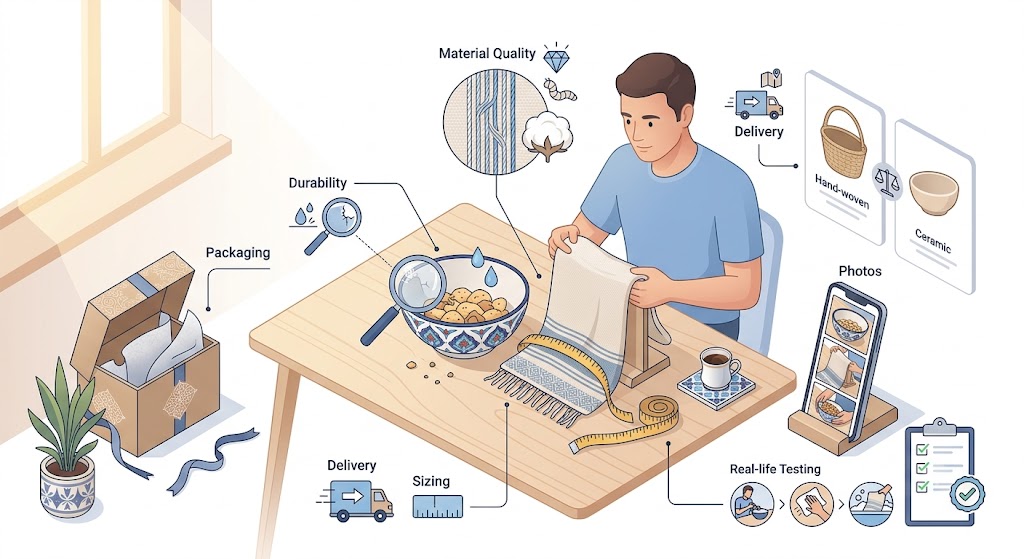
Product reviews SEO works because customer language is specific. People mention size, finish, delivery, packaging, fit and durability. These words often match real searches better than polished product copy.
Why UK and global buyers read reviews before choosing a brand
A UK buyer may like a Turkish product and still want proof. Reviews bring that proof closer.
They answer small questions fast:
| Buyer question | Review detail that answers it |
| Will it arrive well packed? | Delivery and packaging comments |
| Does it match the photos? | User photos and fit notes |
| Does it suit my routine? | Personal use cases |
| Is the brand reliable? | Repeated buyer experience |
For international buyers, reviews shorten the distance between interest and action.
How reviews connect trust, SEO and reputation management
Reviews work across three layers.
First, they build trust. Second, they support customer reviews SEO through natural phrases and product details. Third, they shape reputation through a public record of real customer experience.
This is where reviews connect with digital PR. The best review strategy creates trust and search strength together.
What Strong Product Reviews Need to Include
First-hand evidence and expert review detail
A strong review sounds specific. It talks about the product in use.
“The towel stayed soft after five washes” says more than “great quality”. A skincare review may mention texture, scent and routine. A furniture review may mention finish, comfort and room style.
Strong review content should show real testing, useful photos and clear comparison points.
Quantitative measurements and clear product comparisons
Numbers make a review easier to trust. They also give search systems clearer product facts.
Useful details include:
- Product size
- Weight
- Wash results
- Material mix
- Delivery time
- Fit notes
- Price comparison
A Turkish fashion brand can collect reviews that mention UK sizing. A food brand can collect notes on taste and storage. These details create stronger product comparison content.
Use cases for UK and global buyers
Reviews should speak to the market the brand wants to reach.
For UK buyers, that may include delivery, sizing, weather, gifting seasons and aftercare. For global buyers, that may include export packaging and product origin.
A Turkish towel review that says “ideal after a rainy gym commute in Manchester” feels local. That kind of detail makes product reviews for e-commerce more searchable.
Visual proof, testing notes and decision factors
Reviews with photos and short videos can carry more weight.
Useful review prompts include:
- What made you choose this product?
- How do you use it?
- What detail would you mention to a friend?
- How does it compare with a similar product?
These prompts guide customers towards real decision factors.

How Product Reviews Create Search Demand
Fresh customer language and long-tail search queries
Reviews are full of natural search language. People use phrases brands may miss during keyword research.
A buyer may write “soft Turkish cotton towel for sensitive skin” or “gift box arrived safely in the UK”. These phrases support long-tail search queries.
For a stronger SEO strategy, review mining should become a monthly habit. Repeated phrases can become FAQs, category copy and buyer guides.
Star ratings, snippets and stronger SERP appeal
Ratings can make a search result feel more inviting. When search results show product details, price, availability or rating signals, buyers get more context before they click.
This matters because the search result is often the first brand touchpoint. Review snippets, product-structured data and aggregate rating schema can make product data easier for search engines to read.
Editorial reviews and trusted third-party mentions
A review on the brand’s website matters. A review in a trusted magazine, buyer’s guide, niche blog or creator video can create wider demand.
This is where third-party reviews become powerful. A Turkish jewellery brand in a UK gift guide gains a new path into search.
Branded search growth through repeated exposure
Search demand grows through memory.
A buyer may see a product in a review article, then on TikTok, then in Google results. After a few touchpoints, the buyer searches the brand name.
Pella’s guide to search everywhere optimisation in Turkey connects well here. Reviews should appear across the places where buyers ask, watch, compare and decide.
SEO Foundations Behind Product Review Visibility
Product structured data and review snippets
Search engines need clear signals. Product structured data turns product facts into a format that search systems can read more easily.
Useful fields include product name, image, brand, SKU, price, availability, reviews and ratings. When these details match visible content, search engines get a cleaner product picture.
Aggregate ratings, bids and product identifiers
For e-commerce brands, clean product identifiers matter.
That includes brand name, SKU, GTIN, MPN, product category, price, availability, review count and average rating.
These details should stay consistent across the website, Merchant Centre, marketplaces and review feeds.
Merchant Centre product ratings
Google product ratings can show star ratings across shopping surfaces when the brand meets eligibility rules. For Turkish brands selling into the UK, this can make listings more appealing.
The key is clean review collection, updated review feeds and accurate product identifiers.
Crawlable product facts and internal links
Reviews need to be easy to crawl. Place them on product pages in a readable format. Keep key details visible in HTML.
Internal links also matter. A review page can link to product pages, category pages and buyer guides. For review-led content, content marketing should connect buyer questions with product proof.

Product Reviews as a Digital PR Asset
Reviews in buyer guides and specialist publications
Digital PR can turn reviews into discovery moments.
A Turkish beauty brand can pitch seasonal testing to UK editors. A homeware brand can enter gift guides.
The story should feel useful. It may focus on craft, origin, ingredients, design or expert testing.
Influencer reviews, expert reviews and media placements
Influencer reviews work best when they feel natural. Expert reviews work best when they include method and detail. Media placements work best when they match the right audience.
A strong product review strategy blends all three with customer reviews.
| Review type | Best use |
| Customer reviews | Trust and buyer language |
| Influencer reviews | Discovery and social proof |
| Expert reviews | Authority and detail |
| Media reviews | Reach and brand context |
Backlinks, authority and brand discovery
Review coverage can earn links. These links can support product and category page authority.
For Turkish brands, deeper links are valuable. A backlink to a product guide or collection page can strengthen search visibility beyond the homepage.
This is why digital PR for e-commerce should work with SEO from the start.
Turning review coverage into search-everywhere visibility
One strong review can become many assets.
It can support product pages, social posts, buyer guides, FAQ content, retail pitches and AI search tracking.
This turns one review into a wider visibility system.
Review Strategy for Turkish Brands Reaching UK and Global Buyers
Localise English review content for UK readers
Turkish brands writing in English should use clear UK language. That means “colour”, “favourite”, “personalised” and “optimised”. It also means writing in a way that feels natural to UK buyers.
Local detail matters. Mention UK delivery, size conversion, climate, gifting seasons and daily use. These details make the brand feel ready for the market.
Align review pages with product, category and brand pages
Review content should connect with the rest of the site.
| Page type | Review role |
| Product page | Show direct buyer proof |
| Category page | Show common themes |
| Blog guide | Answer research questions |
| Brand page | Build trust and an origin story |
| FAQ page | Turn repeated themes into answers |
This structure supports both users and search systems.
Build topic clusters around buyer questions
Reviews reveal what buyers care about. Use that insight to build content clusters.
A Turkish textile brand might create pages around Turkish cotton towels, Turkish towel reviews, towel care, hammam towels and gift sets from Turkey.
Each page can link back to the right product and review content.
Connect reviews with Content Marketing and brand positioning.
Reviews show how the market describes the brand. That language can shape content and positioning.
When many buyers mention elegance, durability or craft, those words become strategic signals for product pages, campaigns and PR messaging.
Trust and Review Quality Standards
Genuine review collection and clear incentive disclosure
Review collection should be simple, honest and clear. Ask real buyers for real feedback after purchase. When an incentive is involved, disclose it clearly.
For UK-facing brands, buyers expect clarity on where reviews came from.
Balanced publishing and transparent review systems
A strong review system should show a fair range of customer experiences. Perfect praise can feel less real than detailed, balanced comments.
The best review pages include dates, product variants, photos and brand responses.
Review authenticity for UK and Turkish audiences
Turkish brands working across markets should align review practices with local expectations. UK buyers value transparency. Turkish buyers respond well to clear social proof and visible experience.
Across both audiences, real reviews create stronger trust than polished claims.
Why credibility shapes long-term demand
Credibility compounds.
A single review may support one sale. A steady review system can support brand search, repeat visits, PR interest and AI visibility.
That is why reviews should be treated as long-term demand assets.
How to Measure Product Review Search Demand
Track branded searches and organic query growth
Start with branded searches. Track the brand name, product names and review-led queries.
Look for searches such as brand name plus reviews, product name plus UK, product name plus rating and Turkish product category plus review.
This shows whether discovery is turning into demand.
Monitor rich results, CTR and Product snippet visibility
Use Search Console and rich result testing to monitor pages. Track impressions, clicks, CTR and query growth.
When review snippets or product details appear more often, the brand can see which pages are gaining stronger SERP appeal.
Measure referral traffic, backlinks and media mentions
For PR-led reviews, measure referral traffic and links. Track which publications send qualified visitors and which review placements lead to branded searches later.
Track AI search mentions and search-everywhere signals
AI search tools also read public signals. Reviews, directories, articles and product pages can all shape how a brand appears in AI answers.
Track whether ChatGPT, Gemini, Perplexity and Google AI features mention the brand for product category questions. Reviews can support AI search visibility when they connect to wider brand signals.
Conclusion: Product Reviews as Search Demand Assets
Product reviews are now part of search, PR, content and buyer trust.
For Turkish brands, reviews can turn local strength into global recognition. They bring real customer language into SEO, create proof for UK buyers and make products easier for search engines and AI tools to understand.
The brands that win will collect reviews carefully, structure them clearly and use them across every search touchpoint.
FAQs on Product Reviews for Turkish Brands
How do product reviews increase search demand?
Product reviews increase search demand by giving buyers more reasons to remember and search for a brand. They add real language, product proof and comparison points that can turn broad discovery into branded searches.
Are product reviews useful for Turkish brands selling abroad?
Yes. Product reviews make Turkish brands feel more familiar to UK and global buyers. They show product quality, delivery experience, sizing, use cases and real customer confidence.
What is the difference between product ratings and product reviews?
Product ratings usually show a score, often from one to five stars. Product reviews give written details about the customer experience, product features and real use.
How can Turkish brands make reviews visible on Google?
Turkish brands can make reviews clearer to Google through crawlable review content, aggregate rating schema, product markup and clean product identifiers. The page content and structured data should match closely.
Do product reviews support digital PR?
Product reviews support digital PR because they give journalists, creators and buyers real proof to discuss. Strong review coverage can build trust, earn links and increase search demand for product reviews for Turkish brands.
At Pella Global, product reviews can become a clear search demand asset for Turkish brands.
